Why Is My Female Cat Meowing So Much and Rubbing Everything? Causes, Signs, and What to Do
If your female cat has suddenly started meowing frequently while rubbing against furniture, walls, doors, your legs, or other objects, you may wonder what is happening. In many cases, this behavior is completely normal cat communication. Cats use vocalizations, scent marking, body language, and rubbing to interact with their environment.
However, excessive meowing combined with unusual rubbing can sometimes be related to being in heat, seeking attention, stress, hunger, discomfort, or an underlying medical problem. Understanding the context is the key to figuring out why your cat is acting this way.
Why Is My Female Cat Meowing So Much and Rubbing Everything?
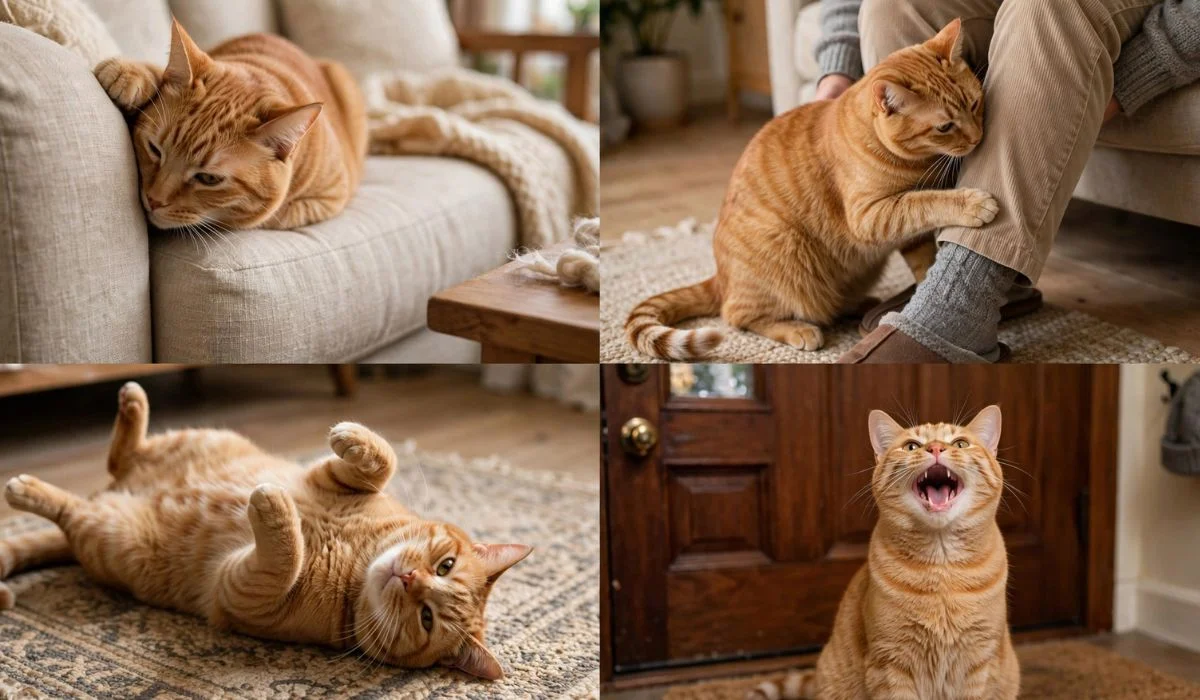
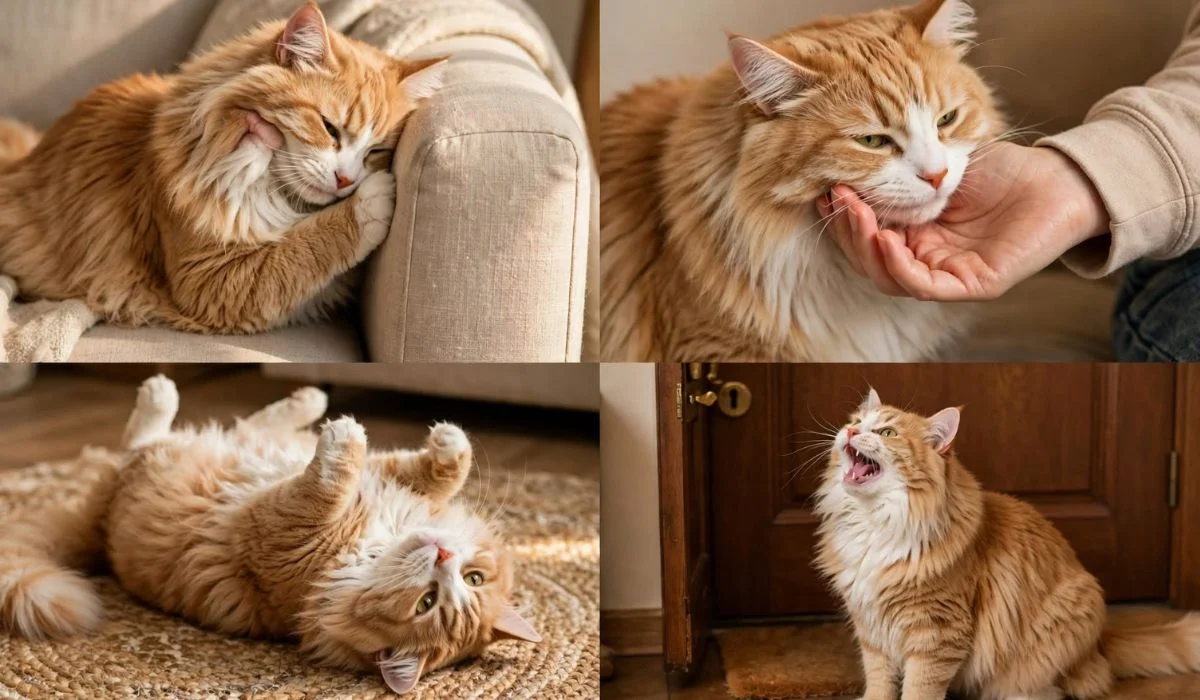
The combination of frequent meowing and rubbing often means your cat is trying to communicate something. Female cats may become particularly vocal and affectionate when they are experiencing hormonal changes.
If your cat is not spayed, one of the first possibilities to consider is a heat cycle. A female cat in heat may become unusually vocal, restless, affectionate, and interested in rubbing against people and objects.
She May Be in Heat
Estrus, commonly called being “in heat,” is one of the most common explanations for a sudden increase in vocalization and rubbing in an unspayed female cat.
During heat, hormonal changes can dramatically alter a cat’s behavior.
Common Signs of Heat in Female Cats
You may notice:
- Loud or persistent meowing
- Increased affection
- Rubbing against furniture and people
- Rolling on the floor
- Restlessness
- Raising the hindquarters when touched near the back
- Moving the tail to one side
- Increased attempts to go outdoors
- Frequent urination or urine marking
- Increased attention toward doors and windows
Some cats become extremely vocal during this period. Their sounds can be much louder or more persistent than their usual meows.
A heat cycle does not necessarily mean your cat is sick. It is a reproductive behavior driven by hormones.
Rubbing Helps Her Leave Her Scent:
When your cat rubs her cheeks, chin, body, or sides against objects, she is not simply being affectionate.
Cats have scent glands around several areas of their body, particularly around the cheeks, chin, forehead, and other facial regions. Rubbing transfers some of these natural scents onto objects.
This is part of normal feline communication and environmental marking.
Why Does She Rub Against Everything?
Your cat may be communicating:
- “This is familiar.”
- “This area is part of my territory.”
- “I feel comfortable here.”
- “I want attention.”
- “I am leaving my scent.”
If she repeatedly rubs her face against furniture and then against you, she may also be mixing her scent with yours.
This is one reason cats often rub against their owners when they come home.
She Could Be Asking for Attention
Some cats learn that meowing gets a response.
If you consistently talk to your cat, pet her, feed her, or play with her after she meows, she may learn that vocalizing is an effective way to get your attention.
Rubbing against you can be part of the same interaction.
Look at What Happens After She Meows
Pay attention to the pattern.
If she meows and then walks toward her food bowl, she may be hungry. If she heads toward a toy, she may want to play. If she walks toward a closed door, she may want access to another room or the outdoors.
Her behavior immediately after vocalizing can provide useful clues.
Hunger Can Increase Meowing:
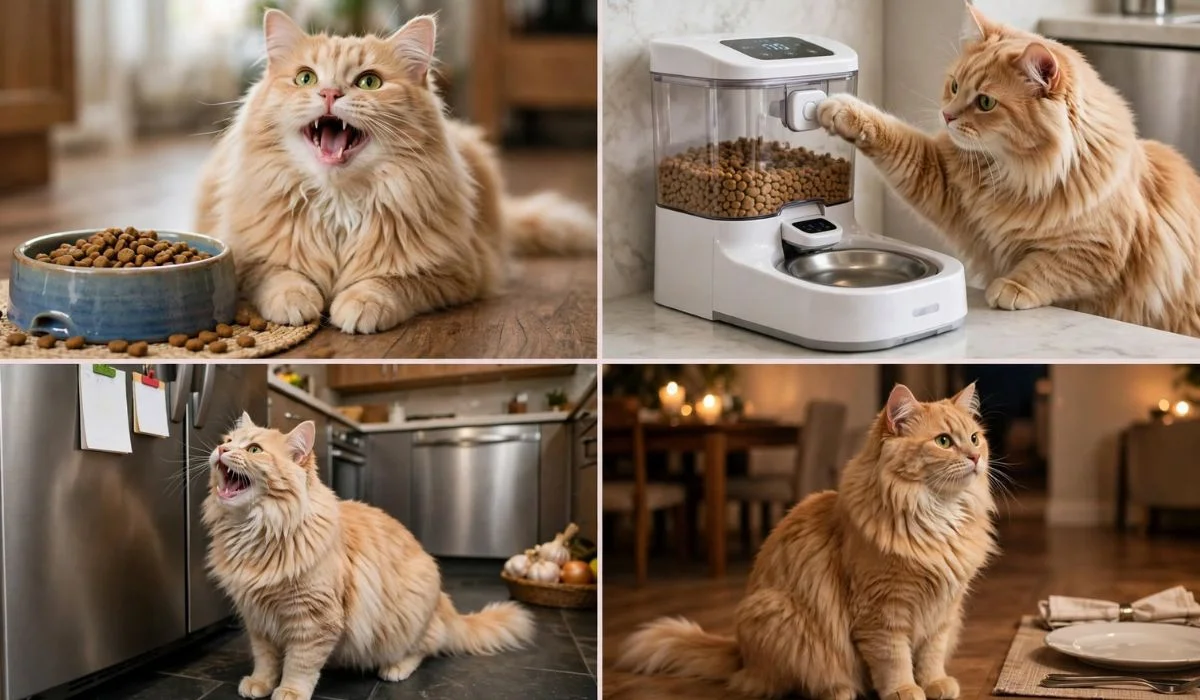
Cats can become surprisingly persistent when they expect food.
A cat that associates a particular time of day with meals may begin vocalizing before feeding time. Some cats also become more demanding if their feeding schedule changes.
Check whether the increased meowing occurs:
- Before meals
- Around the same time every day
- Near the food bowl
- When someone enters the kitchen
- After smelling or hearing food
If the behavior follows a predictable feeding pattern and your cat otherwise appears healthy, hunger or food-seeking may be contributing.
Your Cat May Be Responding to Environmental Changes:
Cats often prefer predictable environments. Even seemingly small changes can affect some cats.
A new pet, visitor, piece of furniture, household smell, construction noise, changed routine, or rearranged room may cause increased vocalization.
Stress Can Look Like Affection
A stressed cat may become more clingy rather than hiding.
She might follow you around, rub against familiar objects repeatedly, meow more often, or seek reassurance from you.
Look for additional signs such as:
- Hiding more than usual
- Changes in appetite
- Excessive grooming
- Reduced grooming
- Avoiding the litter box
- Increased scratching
- Restlessness
- Dilated pupils
- Flattened ears
- Sudden irritability
One behavior by itself rarely tells the whole story.
She May Simply Have a Naturally Vocal Personality:
Some cats are naturally talkative.
Individual cats vary significantly in how much they vocalize. Breed, personality, age, previous experiences, and interactions with humans can all influence communication habits.
A cat that has always been vocal is less concerning than a cat that suddenly becomes extremely vocal without an obvious reason.
The important distinction is new or changing behavior versus a long-standing personality trait.
Could Excessive Meowing Mean Something Is Wrong?
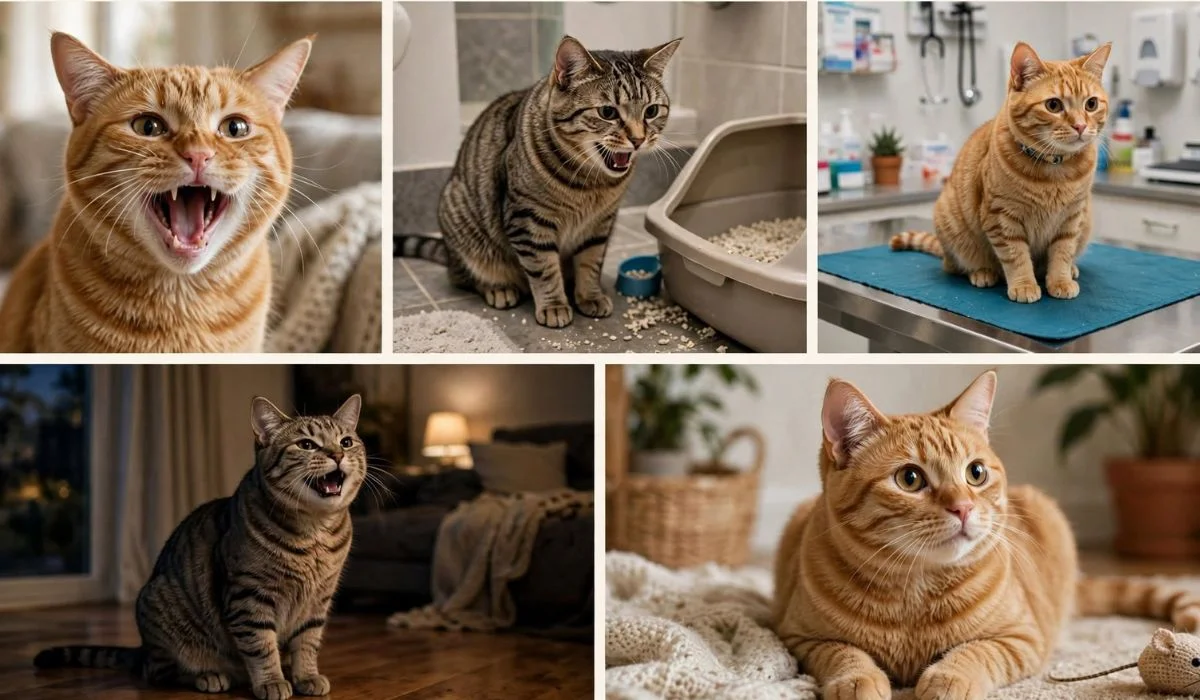
Yes. Although frequent meowing can be behavioral, a sudden increase in vocalization can sometimes indicate discomfort or illness.
Cats are skilled at hiding signs of illness, so behavioral changes deserve attention when they persist.
Pain or Discomfort May Change Vocalization
A cat experiencing pain may become more vocal, restless, withdrawn, or unusually affectionate.
Potential sources of discomfort can include dental problems, injuries, urinary issues, gastrointestinal problems, arthritis, or other medical conditions.
Watch for Physical Changes
Contact your veterinarian if excessive meowing is accompanied by:
- Reduced appetite
- Vomiting
- Diarrhea
- Difficulty urinating
- Frequent trips to the litter box
- Blood in urine
- Significant lethargy
- Weight loss
- Difficulty walking
- Breathing problems
- Persistent hiding
- Obvious signs of pain
Difficulty urinating can be particularly important and should not be ignored.
Older Female Cats May Become More Vocal
Age can also affect vocal behavior.
Older cats may vocalize more because of changes involving hearing, vision, cognitive function, anxiety, or medical conditions. Increased vocalization in a senior cat is therefore worth discussing with a veterinarian rather than automatically assuming it is attention-seeking.
What Does Rubbing Against You Mean?
When your female cat rubs against your legs, hands, or body, it can have several meanings.
She may be greeting you, requesting attention, transferring scent, seeking food, or simply enjoying social contact.
Head Bunting Is Usually a Positive Social Signal
If your cat gently presses or bumps her head against you, this is often called head bunting.
It is generally associated with social bonding and scent exchange.
A relaxed cat may combine head bunting with purring, relaxed body posture, slow blinking, or a raised tail.
Rubbing Does Not Always Mean She Wants Petting
A common mistake is assuming every rubbing behavior means “pet me.”
Your cat may rub against your legs and then walk away. She may be greeting you rather than requesting prolonged physical contact.
Watch her body language instead of relying on the rubbing alone.
How to Tell if She Is in Heat
If your female cat is unspayed, heat should be high on your list of possibilities when she suddenly becomes unusually vocal and affectionate.
Behavioral Clues Are Often More Obvious Than Physical Signs
Cats in heat commonly show behavioral changes rather than obvious bleeding.
You may notice:
- Persistent calling or yowling
- Increased rubbing
- Rolling
- Restlessness
- Increased affection
- Elevated hindquarters
- Tail held to the side
- Attempts to escape outdoors
Female cats generally do not experience menstrual bleeding like humans do, so visible blood should not automatically be interpreted as a normal heat symptom.
If you see blood, especially from the urinary or genital area, veterinary advice is appropriate.
How Long Can Heat Last?
The length and frequency of estrus can vary. A female cat that is not spayed may experience repeated heat cycles, particularly during seasons when reproductive activity is more common.
This can make the vocalization seem to happen repeatedly throughout the year.
What Can You Do About Excessive Meowing?
The best response depends on the reason behind the behavior.
Start With the Basics
Check whether your cat has:
- Fresh water
- Appropriate food
- A clean litter box
- A comfortable resting area
- Opportunities for play
- Safe places to hide
- Vertical spaces
- A predictable daily routine
Sometimes a basic environmental need is responsible for surprisingly persistent vocalization.
Provide Interactive Play
Interactive play can help redirect attention and provide mental stimulation.
Try short play sessions using appropriate cat toys. Wand-style toys, toy mice, balls, and food puzzles can provide different forms of enrichment.
Avoid leaving string, ribbon, or similar long flexible objects available for unsupervised play because they can be swallowed.
Do Not Punish Her for Meowing
Yelling, hitting, spraying water, or frightening your cat is unlikely to solve the underlying problem.
Punishment can increase fear and stress while damaging the relationship between you and your cat.
Instead, identify what she is trying to communicate and respond appropriately.
Consider Spaying if She Is Not Intended for Breeding
If your female cat is not spayed and you are not planning to breed her, discuss spaying with your veterinarian.
Spaying prevents future heat cycles and eliminates the behavioral changes associated with estrus. It also prevents pregnancy and provides important reproductive-health benefits.
Your veterinarian can advise you about the appropriate timing based on your cat’s age, health, and circumstances.
When Should You Call the Veterinarian?
A sudden behavioral change deserves more attention when it is intense, persistent, or accompanied by other symptoms.
Seek Veterinary Advice if the Change Is Unexplained
Make an appointment if your cat suddenly becomes much more vocal and you cannot identify an obvious behavioral reason.
A veterinarian can assess her overall health and determine whether pain, hormonal issues, urinary problems, dental disease, or another condition could be contributing.
Get Prompt Help for Serious Symptoms
Do not wait for a routine appointment if your cat has difficulty breathing, collapses, appears severely painful, cannot urinate, has repeated vomiting, or shows another potentially serious emergency symptom.
A Simple Way to Figure Out What Your Cat Wants
Instead of focusing only on the meowing, observe the entire sequence.
Use the “Meow + Location + Body Language” Method
Ask yourself:
Where is she meowing?
Near the food bowl, door, litter box, window, or a particular person?
What happens next?
Does she eat, play, rub, hide, use the litter box, or attempt to leave?
What does her body language show?
Is her tail upright and relaxed, or is she tense and agitated?
When did it start?
Was there a household change or did it begin suddenly?
Is she spayed?
If not, hormonal behavior becomes a much more likely explanation.
This simple observation can help separate normal communication from behavior that deserves medical attention.
The Bottom Line
If you are wondering, “Why is my female cat meowing so much and rubbing everything?”, the answer may be as simple as communication, attention-seeking, scent marking, hunger, or excitement. If she is unspayed, being in heat is another particularly important possibility.
However, a sudden or dramatic change should not automatically be dismissed as normal. Pay attention to appetite, litter-box habits, activity, grooming, posture, and other signs of health. When excessive vocalization occurs alongside physical or behavioral changes, contacting a veterinarian is the safest approach.
Read Next: Why Does My Cat Love Me So Much All Of A Sudden | Understanding Sudden
FAQs
Why is my female cat suddenly meowing and rubbing against everything?
If she is not spayed, she may be in heat. Other possibilities include seeking attention, marking familiar areas with scent, hunger, stress, or discomfort. Look for additional signs and consider when the behavior started.
Is excessive meowing normal for a female cat in heat?
Yes. Female cats in heat can become much more vocal than usual. They may also rub against people and objects, roll on the floor, become restless, and attempt to get outside.
Why does my cat rub against furniture while meowing?
Rubbing can transfer scent from glands around the face and body onto familiar objects. Meowing at the same time may indicate excitement, attention-seeking, territorial communication, or hormonal behavior.
Why is my female cat rubbing against me constantly?
She may be greeting you, seeking attention, transferring scent, or asking for something such as food or play. If the behavior is new and unusually intense, consider whether another change is occurring.
Does rubbing everything mean my cat is in heat?
Not necessarily. Rubbing is normal feline behavior. However, if an unspayed female also has loud vocalization, rolling, restlessness, increased affection, and mating-related postures, heat becomes more likely.
Can a cat in heat be in pain?
Heat itself is a reproductive state rather than an injury, but some cats can appear restless or uncomfortable during it. If your cat seems genuinely painful, lethargic, ill, or physically abnormal, consult a veterinarian.
Why is my cat meowing at night and rubbing things?
Cats may become active at night, seek attention, respond to environmental sounds, want food, or display hormonal behavior. In an unspayed female, heat can cause particularly persistent nighttime vocalization.
Should I ignore my cat when she meows constantly?
Not automatically. First determine why she is vocalizing. Ignoring a cat that needs medical attention or has an unmet basic need is not appropriate. Avoid rewarding repetitive attention-seeking meowing while making sure her health and environmental needs are covered.
Does spaying stop a female cat from meowing during heat?
Spaying prevents future heat cycles, so it eliminates heat-related vocalization and behaviors. It does not necessarily make a naturally vocal cat quiet in every situation.
When is excessive meowing a medical concern?
It becomes more concerning when it is sudden, persistent, or accompanied by appetite changes, weight loss, vomiting, diarrhea, urinary problems, lethargy, difficulty moving, breathing problems, or signs of pain.
Why does my cat meow and rub against the door?
She may want access to another area, smell something outside, see another animal, or be responding to reproductive instincts. If she is unspayed and showing other heat-related behaviors, hormones may be involved.
Can stress make a cat meow more?
Yes. Changes in the home, new animals, unfamiliar people, noise, altered routines, or other stressful events can affect vocalization. Some cats respond to stress by becoming more vocal or seeking additional reassurance.
How can I calm a female cat that is meowing excessively?
Provide a quiet environment, fresh water, appropriate food, clean litter, safe hiding areas, and interactive play. If she is unspayed and appears to be in heat, discuss spaying with your veterinarian. If the behavior is sudden or accompanied by illness signs, seek veterinary advice.