
Newborn Kitten Care Week By Week | A Complete Guide to Feeding, Growth, Health, and Development
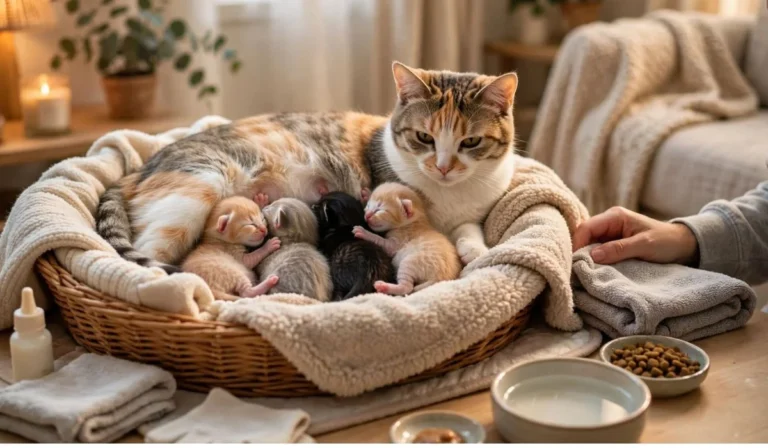
Caring for a newborn kitten can feel overwhelming, especially when the kitten has been separated from its mother. During the first several weeks of life, kittens are highly dependent on warmth, proper nutrition, hygiene, and careful monitoring. Their needs change rapidly from week to week as they develop stronger muscles, better coordination, hearing, vision, and social skills.
This newborn kitten care week by week guide explains what to expect from birth through 8 weeks of age, including feeding, sleeping, warmth, elimination, development, socialization, and warning signs that require veterinary attention.
If you are caring for an orphaned kitten, remember that very young kittens can deteriorate quickly. A veterinarian or experienced neonatal kitten rescue organization can provide individualized advice, particularly when the kitten is weak, cold, underweight, or not feeding normally.
Newborn Kitten Care at a Glance:
The first eight weeks are a period of extraordinary development. A newborn kitten starts life unable to see, hear properly, regulate body temperature effectively, or eliminate independently.
| Age | Main Development | Primary Care Focus |
|---|---|---|
| Birth–1 week | Eyes closed, mostly sleeping | Warmth, milk, elimination |
| 2 weeks | Eyes begin opening | Feeding, warmth, gentle handling |
| 3 weeks | Hearing and mobility improve | Litter introduction, socialization |
| 4 weeks | Walking and exploring | Weaning preparation, play |
| 5 weeks | More coordinated movement | Solid food, litter training |
| 6 weeks | Active play and learning | Socialization, nutrition |
| 7 weeks | Increasing independence | Complete weaning, confidence |
| 8 weeks | Strongly mobile and social | Veterinary care, adoption preparation |
Week 1: Newborn Kitten Care
The first week is the most delicate stage. A newborn kitten spends most of its time sleeping and feeding. Its eyes and ear canals are closed, and it depends heavily on its mother—or a careful human caregiver—for virtually everything.
Feeding and Nutrition
If the mother cat is present and nursing normally, her milk is generally the best nutrition for newborn kittens. Make sure the mother has access to fresh water, nutritious food, a quiet nesting area, and veterinary care if she appears unwell.
For an orphaned kitten, use a commercially prepared kitten milk replacer rather than ordinary cow’s milk. Cow’s milk does not provide the appropriate nutritional balance for a newborn kitten.
Very young kittens usually require frequent feeds throughout the day and night. Follow the milk replacer’s instructions and your veterinarian’s recommendations for the kitten’s age and weight.
Never force milk into a kitten’s mouth because aspiration into the lungs can be dangerous.
Keep the Kitten Warm
Newborn kittens have limited ability to regulate their body temperature. Their nesting area should therefore be warm and draft-free.
Provide a safe heat source that allows the kitten to move away from the warmth if necessary. Avoid placing a kitten directly against a heating pad or another hot surface because burns and overheating can occur.
Important: Never feed a chilled kitten until it has been safely warmed. A cold kitten may not digest food properly and can become critically ill.
Helping With Elimination
During the first few weeks, kittens generally need stimulation to urinate and defecate. The mother normally handles this by licking the genital and anal areas.
For an orphan, a caregiver may need to gently stimulate the area with a warm, damp cotton pad or soft cloth after feeding, following veterinary or rescue guidance.
Week 2: Eyes Begin to Open
Around the second week, developmental changes become easier to notice. Kittens may begin opening their eyes, although the exact timing varies between individuals.
Eyes and Hearing
A kitten’s eyes typically begin opening during the second week, but they should not be forced open. The ears also begin developing as the ear canals open.
Avoid exposing the kitten to bright, intense light while its eyes are still developing.
If you notice swelling, discharge, crusting, or obvious discomfort around the eyes, contact a veterinarian rather than attempting to open or clean the eyes aggressively.
Feeding and Weight Monitoring
Continue the appropriate milk-feeding routine. Weight gain is one of the most useful indicators of whether a young kitten is progressing appropriately.
Weighing the kitten regularly with a digital kitchen scale can help you identify changes early. Record the kitten’s weight and feeding information so you can provide useful details to a veterinarian if concerns arise.
Gentle Handling
Short, gentle handling sessions can help kittens become accustomed to human contact. Keep handling calm and brief, particularly when the kitten needs to sleep or feed.
Wash your hands before and after handling neonatal kittens, especially if you care for multiple cats.
Week 3: Hearing, Movement and Awareness Improve
The third week often brings noticeable changes. Kittens become more alert and begin interacting more with their surroundings.
Encourage Safe Movement
A three-week-old kitten may start attempting to walk instead of simply crawling. Coordination is still developing, so provide a low, secure nesting area where the kitten cannot fall or become trapped.
You may see wobbling, stumbling, and short exploratory movements. This is normal at this stage as muscles and balance continue developing.
Introduce a Small Litter Area
Some kittens may begin showing interest in eliminating on their own around this age. A shallow litter tray with a kitten-safe, non-clumping litter can be introduced.
Keep the tray easy to enter and place it close to the kitten’s living area.
Never punish a kitten for accidents. Litter habits develop through practice and natural exploration.
Continue Socialization
Gentle human interaction becomes increasingly useful. Soft voices, careful touching, and short positive experiences can help kittens become comfortable around people.
The mother cat and littermates are also extremely important sources of social learning when available.
Read Next: Why Is My Female Cat Meowing
Week 4: The Exploration Stage Begins
By four weeks, kittens are becoming much more active. They may walk more confidently, investigate objects, and begin engaging in playful behavior.
Begin Weaning Preparation
Around four weeks, kittens can generally begin being introduced to appropriate kitten food while continuing to nurse or receive milk replacer.
Start slowly rather than abruptly removing milk. A shallow dish containing a suitable wet kitten food can be offered under supervision.
Some kittens immediately investigate food, while others need time to learn how to eat from a dish.
Make the Environment Kitten-Safe
As mobility increases, the kitten’s environment needs to become safer.
Remove access to:
- Electrical cords
- Small objects that can be swallowed
- Open windows
- Deep containers
- Toxic plants
- Household chemicals
- Small gaps where a kitten could become trapped
- Unstable furniture
A kitten can move surprisingly quickly once exploration begins.
Play and Development
Simple, safe toys can encourage natural movement and coordination. Avoid toys with loose pieces, long strings, or components that could be swallowed when unsupervised.
Week 5: Learning to Eat and Use the Litter Box
At approximately five weeks, many kittens become much more independent. They can walk, run short distances, play, and explore with greater confidence.
Feeding Solid Kitten Food
Continue offering nutritionally complete kitten food appropriate for growth. Wet food is often easier for young kittens to eat.
Milk replacer can be gradually reduced as the kitten becomes more comfortable eating solid food, but the transition should be gradual.
Avoid feeding a homemade diet unless it has been specifically formulated by a veterinary nutrition professional.
Litter Training
Place the kitten in the litter tray after meals and naps if it does not naturally use it.
Choose a low-sided tray that is easy to enter. Keep it clean because kittens can be sensitive to dirty litter areas.
Accidents are still possible, so patience is important.
Social Learning Through Play
Play becomes an important part of development. Kittens learn coordination, boundaries, and communication through interactions with their mother and littermates.
If the kitten is orphaned, safe interaction with people and, when appropriate, healthy vaccinated cats or kittens can provide valuable experiences under professional guidance.
Week 6: Active, Curious and Playful
Six-week-old kittens are often energetic little explorers. Their physical coordination continues improving, and they may spend significant portions of their waking time playing.
Maintain a Complete Kitten Diet
The kitten should be eating a nutritionally complete diet designed for kittens. Fresh water should also be available.
Avoid making treats or human foods a significant part of the kitten’s diet because growing kittens have specific nutritional requirements.
Build Positive Social Experiences
Introduce normal household experiences gradually. Let the kitten experience different sounds, surfaces, gentle handling, and safe environments without overwhelming it.
Positive experiences are more useful than forcing interaction.
Veterinary Care
This is an appropriate period to discuss vaccination, parasite control, deworming, and general health with a veterinarian. Exact recommendations depend on the kitten’s health, age, environment, and local veterinary guidelines.
Week 7: Increasing Independence
By seven weeks, many kittens are becoming noticeably independent while still benefiting from guidance from their mother and littermates.
Complete the Weaning Process Gradually
Most kittens are well into the transition to solid food by this point. Continue providing a complete kitten diet and fresh water.
Avoid abruptly changing foods. If a dietary change is necessary, gradual transitions can help reduce digestive upset.
Encourage Appropriate Play
Provide opportunities for climbing, chasing, batting, and exploring in a secure environment.
Interactive play also helps kittens learn appropriate behavior. Use toys rather than hands as play objects to discourage biting and scratching people.
Continue Socialization
Expose the kitten to different people and normal household experiences in a calm, positive manner.
A well-socialized kitten should have opportunities to learn that everyday experiences are safe rather than frightening.
Week 8: Preparing for the Next Stage
At eight weeks, a healthy kitten is typically much more mobile, coordinated, curious, and independent than it was at birth.
Nutrition and Daily Routine
Continue feeding a complete kitten diet according to veterinary recommendations and the food manufacturer’s guidance.
Fresh water should always be accessible. Maintain a clean litter box and provide a safe sleeping area.
Veterinary Examination
A veterinary visit is important around this stage or according to your veterinarian’s recommended schedule. The veterinarian can assess growth, body condition, parasites, vaccinations, and overall health.
If the kitten has never received veterinary care, arrange an examination rather than assuming that appearing playful means everything is healthy.
Preparing for Adoption
If the kitten will be adopted, make sure the new caregiver understands its feeding routine, litter habits, veterinary needs, and socialization history.
Keeping the transition predictable can make moving to a new home less stressful.
How to Care for an Orphaned Newborn Kitten
Orphaned kittens require considerably more hands-on care than kittens raised by their mother.
Essential Supplies
A basic neonatal kitten-care setup may include:
- Kitten milk replacer
- Appropriate feeding equipment
- Digital kitchen scale
- Soft bedding
- Safe heating source
- Shallow litter tray
- Kitten-safe litter
- Complete kitten food for the weaning stage
- Clean towels or soft cloths
- Pet-safe cleaning supplies
The exact equipment depends on the kitten’s age and condition.
Keep Detailed Records
For a very young orphan, recording weight, feeding times, approximate intake, urination, bowel movements, and unusual symptoms can be extremely useful.
A sudden failure to gain weight or a noticeable change in behavior deserves prompt attention.
Signs a Newborn Kitten May Need Veterinary Help
Newborn kittens can become sick quickly. Seek veterinary advice promptly if a kitten:
- Refuses multiple feeds
- Is unusually weak or difficult to wake
- Feels cold
- Has difficulty breathing
- Has persistent vomiting or diarrhea
- Has significant eye discharge or swelling
- Is not gaining weight appropriately
- Has pale or abnormal-looking gums
- Appears dehydrated
- Cries continuously despite feeding and warmth
- Becomes suddenly less responsive
A kitten that is struggling to breathe, extremely weak, cold, unresponsive, or otherwise appears critically ill should receive urgent veterinary attention.
Newborn Kitten Care Mistakes to Avoid
Giving Cow’s Milk
Ordinary cow’s milk is not an appropriate substitute for kitten milk replacer for orphaned newborn kittens.
Feeding a Cold Kitten
A chilled neonate may not be able to digest food properly. Warmth and veterinary guidance are particularly important when a kitten is cold or weak.
Overfeeding
More food is not always better. Follow appropriate feeding guidance based on the kitten’s age, weight, and milk replacer instructions.
Ignoring Weight Changes
Behavior alone does not always reveal whether a kitten is thriving. Regular weight monitoring can provide valuable information.
Separating Kittens Too Early
When possible and safe, kittens benefit from remaining with their mother and littermates during early development. They learn important social behaviors through these relationships.
Newborn Kitten Care Week by Week: Frequently Asked Questions
How often should newborn kittens eat?
Very young kittens need frequent feeding, including overnight when they are orphaned. The exact schedule depends on age, weight, health, and whether the kitten is nursing from its mother or receiving milk replacer.
When do newborn kittens open their eyes?
Many kittens begin opening their eyes during the second week of life. The timing varies, and you should never force a kitten’s eyes open.
When can kittens start eating solid food?
Kittens can generally begin exploring appropriate kitten food at around four weeks. Weaning is gradual and usually progresses over several weeks.
When do kittens start using the litter box?
Kittens begin developing independent elimination skills at around three to four weeks, although individual development varies. A shallow litter tray can be introduced when they begin showing interest.
How can I keep a newborn kitten warm?
Use a safe, controlled heat source and provide enough space for the kitten to move away from the heat. Avoid direct contact with very hot surfaces to prevent burns.
Can newborn kittens drink cow’s milk?
Cow’s milk is not an appropriate replacement for a mother cat’s milk or commercial kitten milk replacer. Orphaned kittens should receive an appropriate milk-replacement formula.
How do I know if my newborn kitten is healthy?
Regular feeding, appropriate weight gain, normal alertness for its age, comfortable breathing, and normal elimination are encouraging signs. A veterinarian should evaluate any kitten showing concerning symptoms.
When should kittens get their first vaccines?
Vaccination schedules vary depending on the kitten’s age, health, previous history, and local veterinary recommendations. Your veterinarian can establish an appropriate vaccination schedule.
How long do newborn kittens need milk?
Kittens gradually transition from milk to solid kitten food during the weaning period. The transition generally begins around four weeks rather than happening suddenly.
What is the most important thing when caring for a newborn kitten?
For an orphaned neonate, maintaining appropriate warmth, providing proper nutrition, monitoring weight, supporting elimination when necessary, and obtaining veterinary guidance are all critical.