How to Groom a Long Haired Cat With Clippers | Safe Grooming Tips
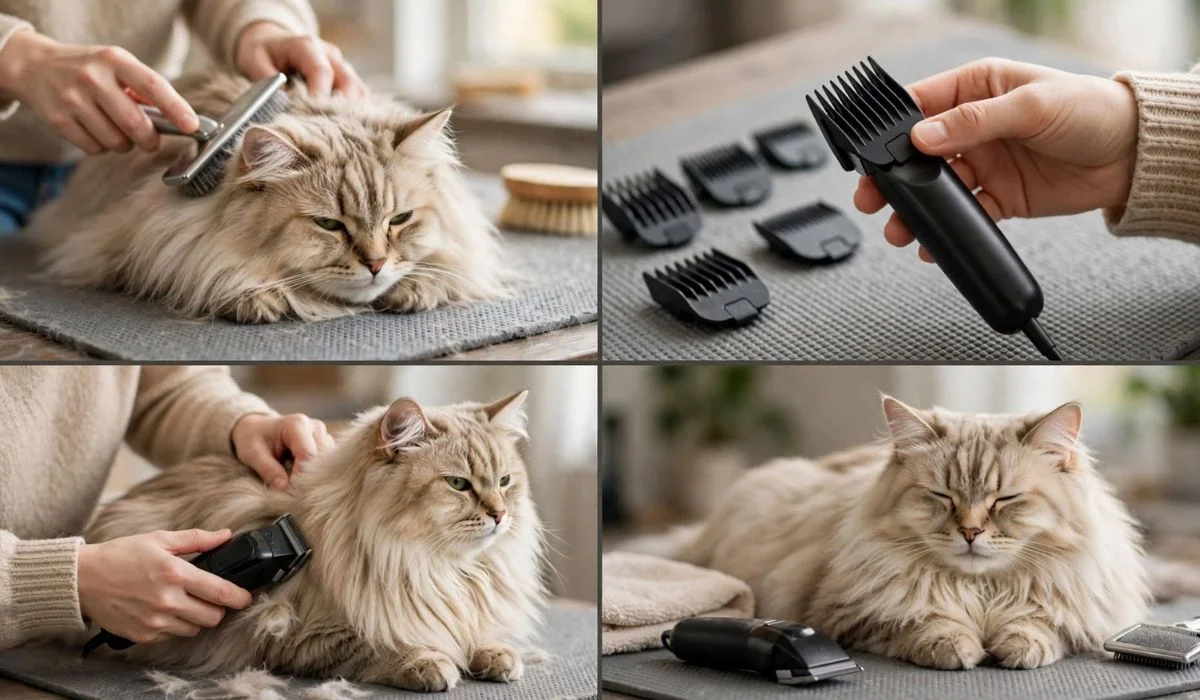
Grooming a long-haired cat with clippers can make coat maintenance easier, especially when the fur becomes excessively long, tangled, or difficult to manage. However, clipping a cat is very different from trimming human hair. Cats have thin, delicate skin that can easily be nicked or irritated, and many cats become nervous when they hear the sound or feel the vibration of electric clippers.
The safest approach is to groom gradually, use equipment designed for pets, and avoid rushing through difficult areas. For routine maintenance, regular brushing is usually preferable to shaving the coat. Clippers are most useful when you need to shorten overgrown fur or carefully remove manageable areas of matting.
If a cat has severe mats, irritated skin, wounds, parasites, or a coat tightly stuck to the skin, professional grooming or veterinary care is a safer choice.
What You Need Before Grooming a Long-Haired Cat:
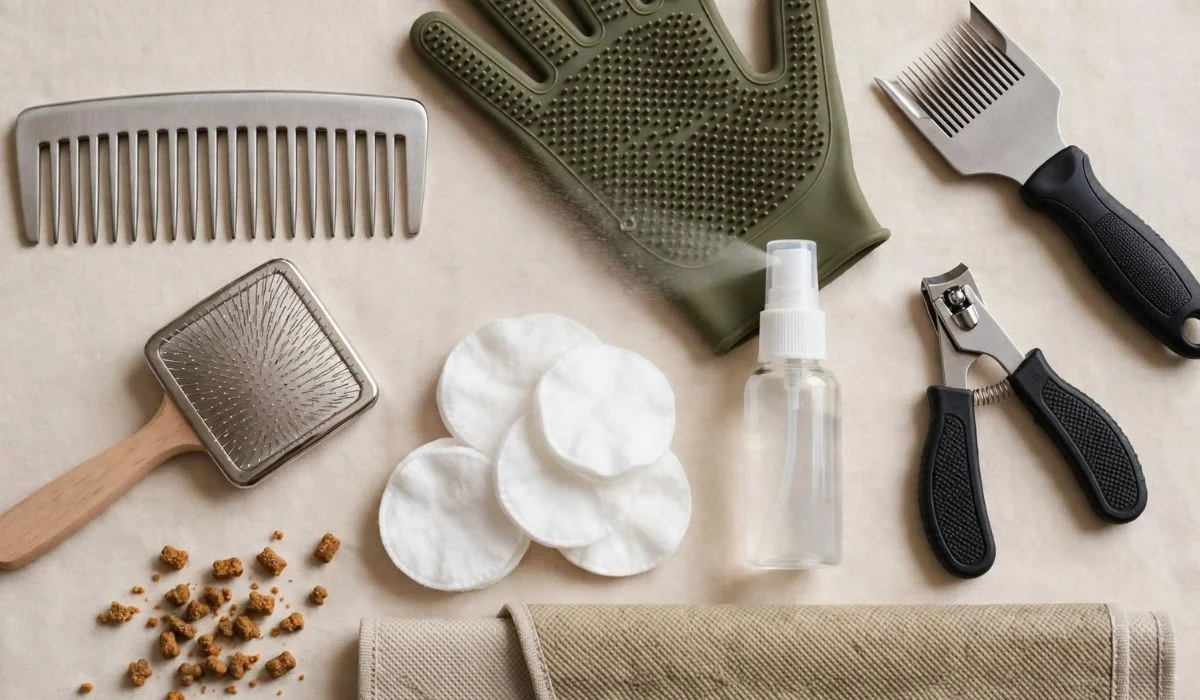
Having everything ready before you start can make the grooming session shorter and less stressful.
Basic Grooming Supplies
You may need:
- Pet-safe electric clippers
- Appropriate clipper blades or guards
- Metal cat comb
- Soft grooming brush
- Clean towels
- Treats
- Non-slip grooming surface
- Small cleaning brush for the clippers
- Pet-safe grooming products when appropriate
Avoid using household scissors to cut close to the skin. A mat can pull the skin upward, making it surprisingly easy to cut your cat accidentally.
Choose the Right Clippers
Not every electric clipper is suitable for cats.
Look for Pet-Specific Features
A suitable clipper should be designed for animal grooming and should allow controlled trimming. Clippers that become very hot can irritate or burn the skin, particularly when used repeatedly in one area.
Before beginning, check the manufacturer’s instructions and make sure the blade is clean and properly attached.
Prepare Your Cat Before Turning on the Clippers
Do not introduce a noisy clipper for the first time by immediately placing it against your cat’s body.
Let your cat investigate the equipment while it is switched off.
Introduce the Sound Gradually
Turn the clipper on several feet away and observe your cat’s reaction.
If your cat remains relaxed, gradually bring it closer without touching the coat. Reward calm behavior with gentle praise or a small treat.
This conditioning process can help your cat become more comfortable with the vibration and sound.
Brush the Coat Before Clipping
Brushing should usually come before clipping.
A brush and comb can remove loose fur and identify tangles that may complicate grooming.
Check for Mats Carefully
Run a comb gently through the coat, paying special attention to:
- Behind the ears
- Around the neck
- Armpits
- Belly
- Inner legs
- Chest
- Around the tail
- Hindquarters
Do not force a comb through a tight mat.
Severe matting may require professional removal because pulling on a dense mat can hurt the skin.
Choose a Calm Grooming Location:
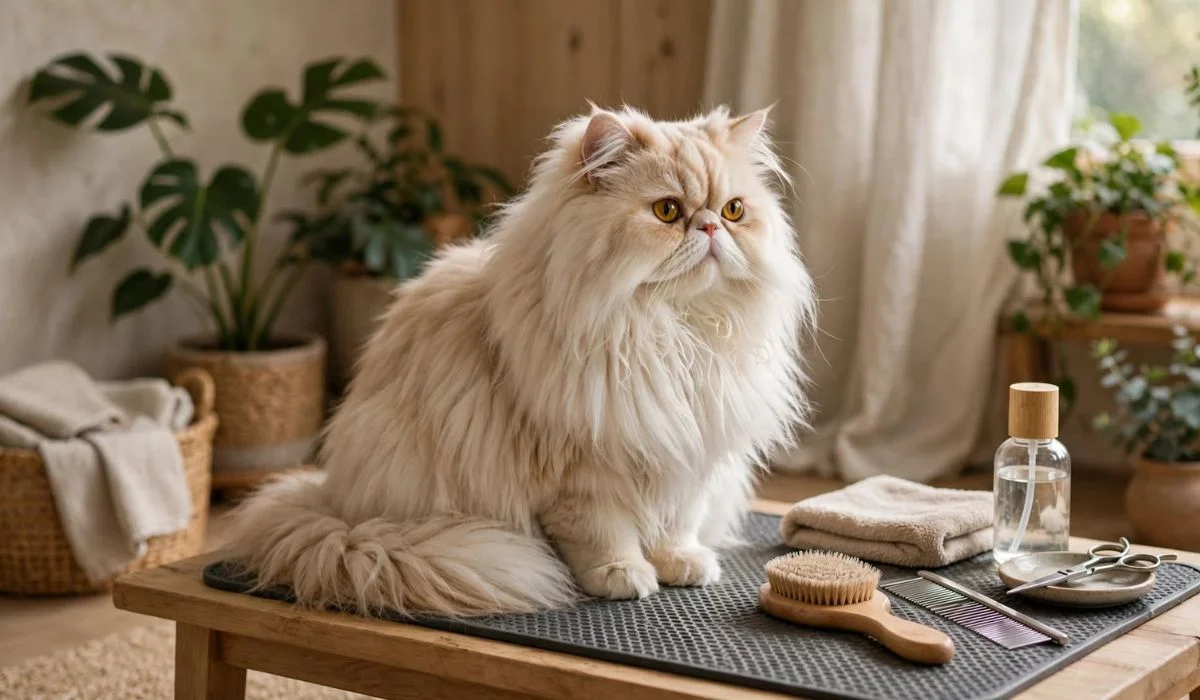
Pick a quiet area with good lighting and a stable surface.
A slippery countertop or table can make your cat feel insecure.
Keep the Session Short
Do not assume you have to complete the entire haircut in one sitting.
For nervous cats, several short grooming sessions can be much safer than one long session.
If your cat becomes increasingly stressed, stop and allow them to calm down.
Start With an Easy Area
If your cat is comfortable with the clippers, begin with a relatively easy area such as the back or side of the body.
Avoid starting around the face, paws, belly, or tail.
Move Slowly With the Fur
Hold the clipper gently and move it steadily through the coat.
Avoid pressing the blade firmly against the skin.
Slow, controlled movements give you more time to notice changes in the skin or your cat’s behavior.
Keep the Skin Flat
Loose cat skin can move underneath the clipper.
This is especially important around the belly, armpits, and legs.
Use Extra Care Around Skin Folds
If the skin is loose or folded, gently stretch it flat with your free hand before approaching the area.
Never pull the skin aggressively.
If you cannot safely position the skin away from the blade, leave the area for a professional groomer.
Work in Small Sections
Trying to clip an entire coat in one continuous pass can increase stress for both you and your cat.
Instead, divide the coat into manageable sections.
Check Your Progress Frequently
After each section, run your hand gently over the coat to identify uneven areas or remaining tangles.
You do not need to create a perfectly uniform haircut for a cat. The priority should be coat health and safety.
Be Extremely Careful Around the Belly
The belly is one of the most challenging areas to clip.
Cats often have loose skin in this region, and the skin can move toward the blade.
When to Skip the Belly
If your cat struggles, kicks, bites, or repeatedly tries to escape, stop.
A professional groomer has the equipment and experience to handle difficult areas more safely.
Take Special Care Around the Legs
The legs contain many small contours that make clipping more difficult.
Do not force a clipper between the toes or around delicate areas simply to achieve a shorter coat.
Don’t Chase Perfect Results
Uneven fur is much less important than avoiding an injury.
If the coat is reasonably tidy and your cat remains comfortable, there is no need to repeatedly go over the same area.
Grooming Around the Tail
The tail can be tricky because cats often dislike having it handled.
Use gentle movements and avoid pulling on the fur.
Avoid Aggressive Trimming
The tail does not usually need to be shaved simply because a cat has long fur.
If the tail contains severe matting or the skin underneath appears abnormal, professional assessment is preferable.
Read Next: How to Keep Your Cat Entertained
Be Careful Near the Face and Ears
The face is not an appropriate area for inexperienced clipper grooming.
The eyes, ears, whiskers, and delicate facial skin require careful handling.
Leave Detailed Facial Trimming to Professionals
Do not bring electric clippers close to the eyes or attempt to shave whiskers.
Whiskers are important sensory structures and should not be cut as part of a routine haircut.
If facial fur needs significant trimming, seek advice from a professional groomer or veterinarian.
Watch the Temperature of the Clipper Blade
Clipper blades can become hot during use.
A blade that feels comfortable initially may become significantly warmer after continuous operation.
Check the Blade Frequently
Pause regularly and check the blade according to the manufacturer’s safety instructions.
If it becomes hot, stop using it and allow it to cool or switch to an appropriate spare blade.
Never continue clipping with an overheated blade against your cat’s skin.
What to Do if Your Cat Has Matted Fur
Clippers can sometimes be useful for removing severe mats, but this is one of the situations where professional help may be the safest option.
Never Pull a Tight Mat With the Clipper
A tightly compressed mat can pull the skin toward the cutting surface.
If you cannot clearly distinguish the mat from the skin underneath, do not attempt to force the clipper through it.
Professional groomers and veterinarians can determine the safest way to remove extensive matting.
Should You Shave a Long-Haired Cat?
Most healthy cats do not need their entire coat shaved simply because they have long fur.
A cat’s coat provides insulation and protection, and regular brushing is generally a better maintenance strategy.
Situations Where Clipping May Be Useful
Clipping may sometimes be considered for:
- Severe matting
- Excessively difficult coat maintenance
- Certain medical or hygiene situations
- Professional grooming requirements
- Veterinary treatment
The appropriate length depends on the cat and the reason for trimming.
Avoid Shaving the Coat Too Short
A very close shave can expose sensitive skin.
It can also remove much of the coat that naturally protects the skin from environmental exposure.
Don’t Try to Make the Cat Completely Hairless
A long-haired cat does not need to look like a short-haired cat after grooming.
For routine maintenance, keeping a reasonable amount of coat is generally more practical than removing as much fur as possible.
Reward Your Cat During and After Grooming
Positive reinforcement can make future grooming sessions easier.
Give your cat praise, affection, or a small appropriate treat when they remain calm.
End on a Positive Note
You do not have to finish the entire grooming job if your cat is becoming uncomfortable.
Stopping before your cat becomes extremely stressed can make the next session easier.
Clean the Clippers After Grooming
Hair buildup can affect clipper performance.
After grooming, switch off and unplug the equipment according to its instructions.
Maintain the Blades
Remove accumulated hair and follow the manufacturer’s cleaning and lubrication instructions.
Well-maintained equipment is easier to control and less likely to perform poorly during future grooming sessions.
How Often Should a Long-Haired Cat Be Groomed?
The ideal grooming frequency varies according to coat type, length, shedding, age, lifestyle, and individual grooming habits.
Long-haired cats often benefit from frequent brushing because loose hairs can become tangled before they are noticed.
Daily Checks Can Prevent Bigger Problems
You do not necessarily need to use clippers regularly.
Instead, inspect the coat frequently and remove small tangles early.
Regular brushing is often the simplest way to reduce the need for major clipping.
Signs Your Cat Needs Professional Grooming
Some grooming problems are better handled by someone with specialized experience.
Seek Professional Help If You Notice
Consider contacting a professional groomer or veterinarian when:
- Mats cover large portions of the body.
- Mats are tightly attached to the skin.
- Your cat becomes extremely distressed.
- The skin is red or swollen.
- There are wounds or bleeding.
- Your cat appears painful.
- You cannot safely control the cat.
- The coat contains suspected parasites.
- The cat’s grooming needs are related to a medical problem.
A veterinarian should evaluate unexplained skin changes, painful areas, or sudden changes in grooming behavior.
A Simple Long-Haired Cat Clipping Routine
For a manageable grooming session, keep the process straightforward.
Your Step-by-Step Checklist
- Prepare the grooming area.
- Gather pet-safe clippers and grooming tools.
- Let your cat relax.
- Brush and comb the coat.
- Identify mats and sensitive areas.
- Introduce the clipper gradually if your cat is unfamiliar with it.
- Start on an easy body section.
- Move the clipper slowly without pressing hard.
- Keep loose skin away from the blade.
- Check the blade temperature frequently.
- Take breaks when needed.
- Avoid the eyes, whiskers, and delicate facial areas.
- Stop if your cat becomes highly distressed.
- Reward your cat after grooming.
- Clean and maintain the equipment.
Common Mistakes to Avoid
A few mistakes can turn a simple grooming session into an unpleasant experience.
Don’t Rush Through the Coat
Speed is not the goal.
Moving too quickly can cause uneven trimming, increase stress, and make it harder to notice loose skin or sensitive areas.
Don’t Force a Resistant Cat
If your cat is fighting the clippers, continuing can increase the chance of injury.
A professional groomer can often complete difficult grooming more safely.
Don’t Use Human Hair Clippers Without Checking Their Suitability
Human clippers may not be designed for dense animal coats and may not provide the appropriate performance or safety features.
Use equipment intended for pet grooming and follow its instructions.
Final Thoughts
Learning how to groom a long-haired cat with clippers can make coat maintenance easier, but safety should always come before appearance. Start with brushing, introduce clippers gradually, work in small sections, and pay particular attention to loose skin around the belly, legs, and other sensitive areas.
You do not need to shave a long-haired cat completely to keep the coat manageable. Regular brushing and early attention to small tangles can reduce the need for extensive clipping.
If the coat is severely matted, the skin looks abnormal, or your cat becomes difficult to handle, professional grooming or veterinary assistance is the better choice. A calm cat and healthy skin are far more important than achieving a perfectly even haircut.
Frequently Asked Questions
Can I groom my long-haired cat with clippers at home?
Yes, some cats can be safely groomed at home with appropriate pet clippers, patience, and proper technique. Routine brushing should still be part of the grooming routine, and difficult areas may be better handled by a professional.
What type of clippers should I use on a long-haired cat?
Choose clippers specifically designed for pet grooming and suitable for feline coats. Look for equipment that allows controlled trimming and monitor the blade temperature during use.
Should I shave my long-haired cat in the summer?
Usually, a healthy cat does not need to be shaved simply because the weather is warm. A cat’s coat provides insulation and protection. Regular brushing is generally preferable unless there is a specific grooming or veterinary reason for clipping.
Can I use human hair clippers on my cat?
It is better to use equipment designed for pet grooming. Human clippers may not be appropriate for a cat’s coat or designed for the way animal fur behaves.
How do I groom a cat that hates clippers?
Introduce the sound gradually, reward calm behavior, and keep early sessions very short. If your cat becomes highly stressed or aggressive, stop rather than forcing the process and consider professional grooming.
How do I clip a long-haired cat without hurting the skin?
Keep the skin flat where possible, avoid pressing the blade against the body, work slowly, and check difficult areas carefully. Extra caution is needed around the belly, armpits, legs, and other areas with loose skin.
Can I use clippers to remove matted cat hair?
Clippers may be used by experienced professionals to remove mats, but severe matting can be difficult and risky to handle at home. If a mat is tight against the skin, professional removal is safer than forcing a clipper underneath it.
Should I cut my cat’s whiskers when grooming?
No. Whiskers should not be cut as part of routine grooming. They are important sensory structures and serve a different function from ordinary body fur.
How often should I clip a long-haired cat?
There is no universal clipping schedule. Many long-haired cats need regular brushing rather than routine shaving. Clipping frequency depends on coat condition, matting, grooming needs, and veterinary recommendations.
What should I do if the clipper gets hot?
Stop grooming and allow the blade to cool according to the manufacturer’s instructions. Do not continue using a hot blade against your cat’s skin because it can cause irritation or burns.
Is it better to brush or clip a long-haired cat?
For routine maintenance, brushing is generally preferable because it removes loose hair and helps prevent mats while preserving the natural coat. Clippers are more useful when trimming is specifically needed.
Can I groom my cat while they are sleeping?
It is better to groom when your cat is relaxed and awake enough to respond to handling. Avoid using electric clippers on a sleeping cat because a sudden movement could increase the risk of injury.