How To Put A Cat To Sleep Instantly Home Remedies | Safe Options
If you are searching for how to put a cat to sleep instantly home remedies, you may be dealing with a cat that is seriously ill, in pain, restless, or nearing the end of its life. It is important to know that there is no safe home remedy that can instantly and peacefully euthanize a cat. Household medications, chemicals, alcohol, essential oils, or other substances can cause severe poisoning, prolonged suffering, seizures, breathing problems, or organ failure.
The safest approach is to focus on comfort and contact a veterinarian. If euthanasia is necessary, a veterinarian can perform it using appropriate medications designed to minimize fear and pain. In some locations, at-home veterinary euthanasia may also be available, allowing a cat to remain in familiar surroundings.
Why You Should Never Try Home Euthanasia:
Trying to euthanize a cat without veterinary supervision can quickly become an emergency. Substances that appear harmless to people may be extremely dangerous to cats.
Common Household Substances Can Be Toxic
Human painkillers, sedatives, cleaning products, alcohol, and certain essential oils can cause poisoning rather than peaceful sleep. The amount that causes toxicity can vary according to the cat’s size, age, health, and the substance involved.
Never intentionally give a cat an unknown medication or excessive dose to make it unconscious or end its life.
“Sleeping” and Euthanasia Are Not the Same
A cat becoming unconscious does not necessarily mean it is free from pain. Some toxic substances can cause vomiting, tremors, respiratory distress, seizures, or unconsciousness while serious internal damage continues.
A veterinarian uses carefully selected medications and monitoring to make euthanasia as calm and humane as possible.
What to Do If Your Cat Is Suffering Right Now
If your cat appears to be in severe distress, don’t experiment with home remedies. Call a veterinarian or emergency veterinary service as soon as possible.
Signs That Require Urgent Veterinary Attention
Seek immediate help if your cat has difficulty breathing, collapses, has repeated seizures, cannot stand, is severely injured, is unresponsive, or appears to be experiencing uncontrolled pain.
Other concerning changes can include refusing food and water, persistent vomiting, extreme weakness, hiding continuously, unusual vocalization, or major changes in normal behavior.
Safe Ways to Comfort a Dying Cat at Home
If a veterinarian has determined that your cat is approaching the end of life, you can often make its surroundings quieter and more comfortable while arranging professional care.
Create a Calm Resting Area
Give your cat a warm, quiet place away from loud noises, children, and other animals. Use soft bedding and keep food, water, and a litter box nearby if your cat can still use them comfortably.
Avoid forcing your cat to move unnecessarily.
Keep Handling Gentle
A sick or painful cat may become sensitive to touch. Let your cat choose whether to interact with you. Gentle talking and quiet companionship may be more comforting than frequent handling.
Follow Veterinary Instructions
Your veterinarian may recommend appropriate pain-control or supportive medications. Give only medications specifically prescribed or approved for your cat and follow the dosage instructions exactly.
Can a Veterinarian Put a Cat to Sleep at Home?
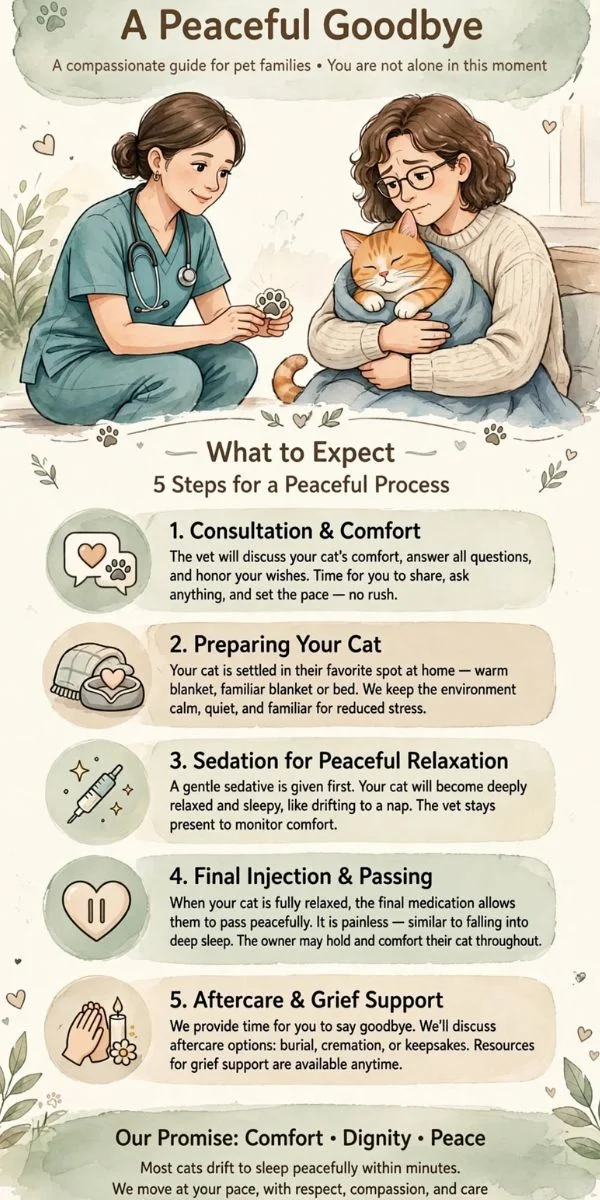
Yes, depending on your location, some veterinarians provide in-home euthanasia. This can allow a cat to remain in a familiar environment rather than traveling to a clinic.
The veterinarian can explain the procedure beforehand, discuss comfort and sedation, and help you understand what to expect.
Why Professional Euthanasia Is Safer
Veterinary euthanasia is specifically designed to prevent unnecessary suffering. The veterinarian can assess the cat’s condition, explain available options, and use appropriate medications.
If cost, transportation, or anxiety about visiting a clinic is the reason you are searching for home remedies, tell the veterinarian. They may be able to suggest lower-cost services, mobile veterinary care, payment options, or local animal-welfare resources.
Read Next; 20 Cat Care Checklist | A Complete Daily
How to Know When It May Be Time:
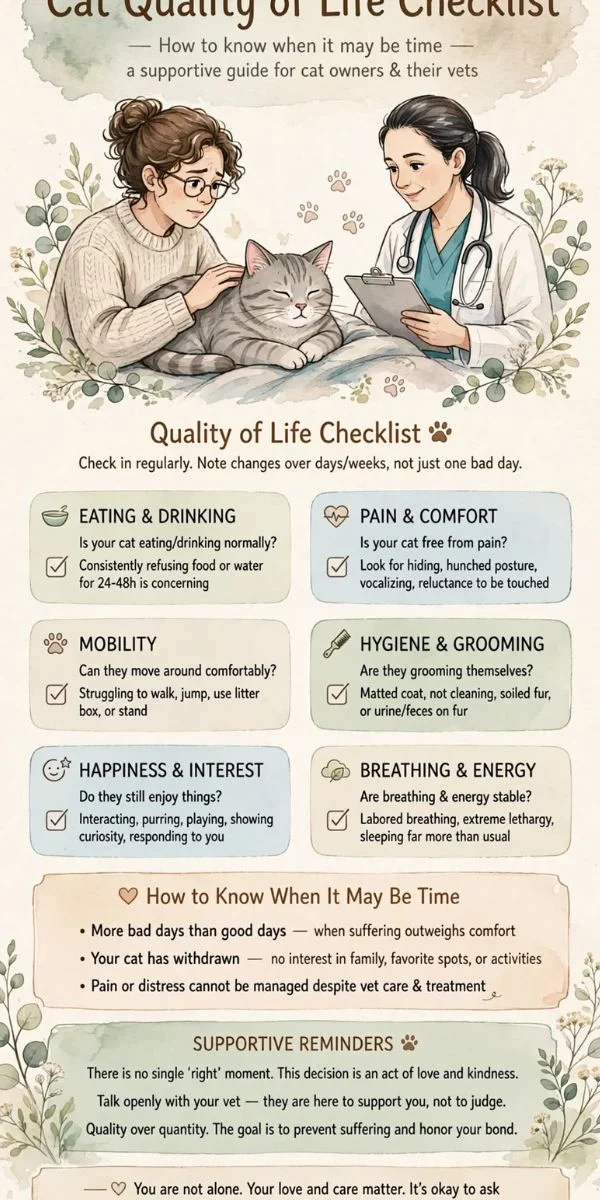
There is no single symptom that determines when euthanasia is appropriate. Instead, veterinarians often consider the cat’s overall quality of life.
Questions to Consider
Ask yourself:
- Is my cat experiencing pain that cannot be adequately controlled?
- Can my cat eat and drink comfortably?
- Can my cat breathe normally?
- Can my cat move without significant distress?
- Can my cat use the litter box?
- Does my cat still have periods of comfort or enjoyment?
- Are bad days becoming more frequent than good days?
Keeping a simple daily quality-of-life journal can help you identify changes that are difficult to notice from one day to the next.
What Not to Give a Cat to Make It Sleep:
Do not attempt to make a cat unconscious or euthanize it with household substances or medications that have not been prescribed for that animal.
Avoid Human Medications
Many common human medications can be dangerous to cats. Even medications that are safe for people can cause serious poisoning in cats when given at inappropriate doses.
Never assume that a larger dose will simply make a cat sleep peacefully.
Avoid Essential Oils and Homemade Mixtures
Essential oils and concentrated plant products can be harmful to cats. Homemade mixtures are particularly risky because their concentration and effects are unpredictable.
What If You Already Gave Your Cat Something?
If your cat has already swallowed medication, chemicals, alcohol, essential oils, or another potentially toxic substance, treat the situation as a poisoning emergency.
Contact a veterinarian or emergency veterinary service immediately. Keep the product container or packaging available so professionals can identify what was consumed.
Do not give additional substances to counteract it unless a veterinary professional specifically tells you to do so.
Humane Alternatives When Euthanasia Is Being Considered
If your cat is suffering and you believe euthanasia may be the kindest option, there are several ways to approach the decision.
Veterinary Clinic Euthanasia
A clinic can provide a controlled environment with veterinary supervision. Ask the veterinarian to explain each stage of the process before making a decision.
At-Home Veterinary Euthanasia
For cats that become extremely stressed during transportation, ask whether a veterinarian in your area offers home visits. Availability varies by location.
Palliative or Hospice Care
If euthanasia is not immediately necessary, your veterinarian may discuss palliative care focused on comfort and quality of life. This can include appropriate pain management, nutrition support, environmental adjustments, and monitoring.
If You Are Struggling With the Decision
Choosing euthanasia for a beloved cat can be emotionally overwhelming. Wanting to prevent suffering does not mean you need to handle the process yourself.
A veterinarian can help you distinguish between treatable discomfort and end-of-life suffering and can explain realistic options based on your cat’s condition.
If the situation is urgent, prioritize professional veterinary help rather than searching for a home remedy.
Frequently Asked Questions
Is there a safe home remedy to put a cat to sleep instantly?
No. There is no reliable household remedy that can safely and humanely euthanize a cat instantly. Attempting this can cause severe poisoning and suffering. Humane euthanasia should be performed by a qualified veterinarian.
Can I give my cat sleeping pills?
Do not give human sleeping pills or other medications unless a veterinarian has specifically prescribed them for your cat. Some medications can be highly toxic to cats.
How can I make a dying cat comfortable at home?
Provide a quiet, warm resting area, minimize unnecessary handling, keep essentials nearby, and follow your veterinarian’s instructions for prescribed medications and supportive care.
Can a vet euthanize my cat at home?
In some areas, veterinarians or mobile veterinary services offer in-home euthanasia. Contact local veterinary practices to ask about availability.
How do I know if my cat is suffering?
Difficulty breathing, severe weakness, uncontrolled pain, repeated vomiting, inability to eat or drink, collapse, and major changes in normal behavior can indicate serious illness or distress. A veterinarian should assess these signs.
What should I do if my cat ate something toxic?
Contact a veterinarian or emergency veterinary service immediately. Keep the packaging or name of the substance available and don’t attempt another home treatment unless a professional instructs you to do so.
Is euthanasia painful for cats?
When performed properly by a veterinarian, euthanasia is intended to be peaceful and minimize pain and distress. Your veterinarian can explain the procedure and answer questions before it begins.
What is the kindest option for a cat that is suffering?
The kindest option depends on the cat’s medical condition and quality of life. A veterinarian can help determine whether treatment, palliative care, or humane euthanasia is appropriate.