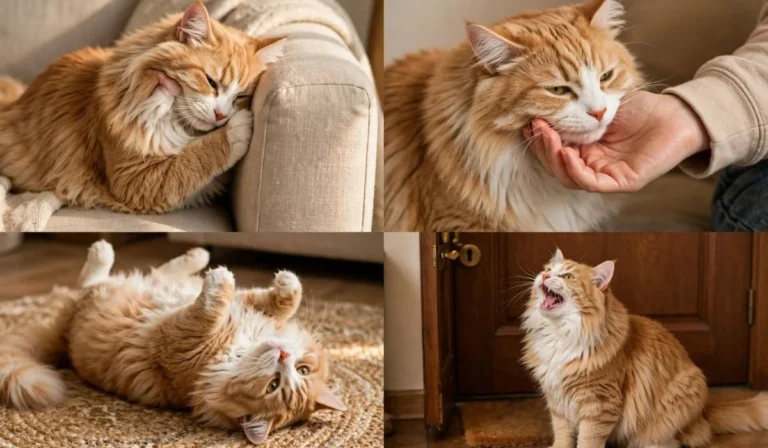
How To Take Care Of An Indoor Cat | A Complete Guide
Learning how to take care of an indoor cat involves much more than providing food and a litter box. Indoor cats need proper nutrition, fresh water, regular grooming, exercise, mental stimulation, veterinary care, a clean environment, and plenty of safe opportunities to behave naturally.
Although indoor cats are protected from many outdoor dangers, they can still develop health and behavior problems if their physical and emotional needs are overlooked. A consistent daily routine and a cat-friendly home can help your companion stay active, comfortable, and healthy for years.
Create a Safe and Comfortable Indoor Environment
Your home should give your cat places to rest, play, scratch, hide, and observe its surroundings. Cats generally feel more secure when they have access to elevated areas and quiet spaces where they can retreat when they want privacy.
Provide Comfortable Sleeping Areas
Cats sleep for many hours each day, so comfortable resting areas are essential. Offer a soft bed, blanket, or cushion in a quiet location. You do not need to force your cat to use a particular bed because cats often choose their own favorite sleeping spots.
Consider providing several resting areas around the home, including one elevated location if it can be made completely secure.
Remove Common Household Hazards
Keep potentially dangerous substances away from your cat. Cleaning products, medications, chemicals, small objects, strings, and certain plants can create hazards.
Secure electrical cords, keep windows protected with appropriate screens, and check balconies carefully. Avoid allowing your cat access to unsafe areas where it could fall or become trapped.
Feed Your Indoor Cat a Balanced Diet
Nutrition is one of the most important parts of indoor cat care. Cats are obligate carnivores, meaning their natural diet requires nutrients found in animal tissues.
Choose a complete and balanced cat food appropriate for your cat’s age and life stage.
Control Portion Sizes
Indoor cats may be less active than cats that spend time outdoors, which can make weight management particularly important. Follow feeding guidance on the food label and adjust portions based on your cat’s body condition, activity level, and veterinarian’s recommendations.
Avoid leaving unlimited food available if your cat tends to overeat.
Make Fresh Water Available
Cats should have access to clean, fresh water every day. Place water bowls in convenient locations and wash them regularly.
Some cats prefer moving water, so a properly maintained pet water fountain may encourage increased drinking. However, a simple clean bowl works well for many cats.
Keep the Litter Box Clean
A clean litter box can make a major difference in your cat’s comfort and bathroom habits. Scoop waste regularly and clean the box according to the type of litter you use.
Use Enough Litter Boxes
A commonly recommended guideline is one litter box per cat plus one additional box. For example, a home with two cats may benefit from three litter boxes.
Place boxes in quiet, easily accessible locations rather than areas where the cat could feel trapped.
Watch for Changes in Bathroom Habits
Sudden changes in urination or defecation can sometimes indicate a medical or behavioral problem. Straining to urinate, frequent attempts to urinate, blood in the urine, or inability to urinate can require urgent veterinary attention.
Do not assume that avoiding the litter box is simply bad behavior.
Give Your Indoor Cat Daily Exercise:
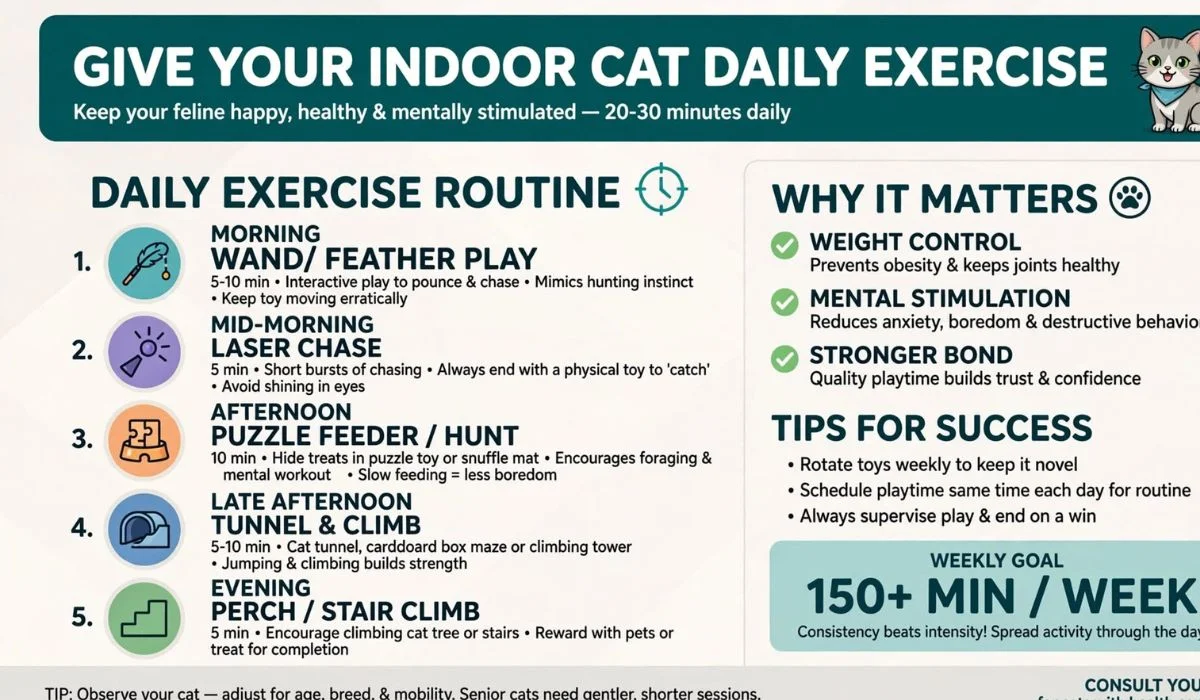
Indoor cats still need opportunities to move their bodies. Regular activity can support healthy weight management and provide an outlet for natural behaviors.
Use Interactive Toys
Wand toys, toy mice, balls, tunnels, and puzzle toys can encourage movement. Rotate toys periodically so that familiar objects remain interesting.
Short play sessions throughout the day can be more practical than expecting your cat to exercise for one long period.
Encourage Natural Hunting Behaviors
Interactive play can mimic parts of a cat’s natural hunting sequence. Move a toy unpredictably and allow your cat to stalk, chase, and eventually catch it.
Avoid using your hands or feet as toys because this can encourage biting and scratching during play.
Provide Mental Stimulation
Physical exercise is only one part of indoor cat care. Cats also need mental stimulation to prevent boredom.
Add Puzzle Feeders and Food Games
Puzzle feeders can make cats work for part of their food and provide mental enrichment. Start with simple puzzles and gradually introduce more challenging ones if your cat enjoys them.
You can also hide small portions of food around safe areas of the home to encourage supervised searching.
Give Your Cat a View
A secure window perch can provide hours of visual stimulation. Cats may enjoy watching birds, people, insects, or outdoor activity.
Make sure windows are securely screened and that the perch cannot cause your cat to fall.
Provide Scratching Opportunities
Scratching is a normal feline behavior. It helps cats stretch, maintain their claws, and leave scent and visual markings.
Choose Different Scratching Surfaces
Some cats prefer vertical scratching posts, while others like horizontal cardboard scratchers. Providing both types can help you discover your cat’s preference.
Place scratching surfaces near sleeping areas or locations where your cat already scratches.
Read Next: How To Put A Cat To Sleep
Keep Scratching Posts Stable
A scratching post should not wobble or fall over when the cat uses it. A stable, appropriately sized post allows the cat to stretch its body while scratching.
Groom Your Indoor Cat Regularly
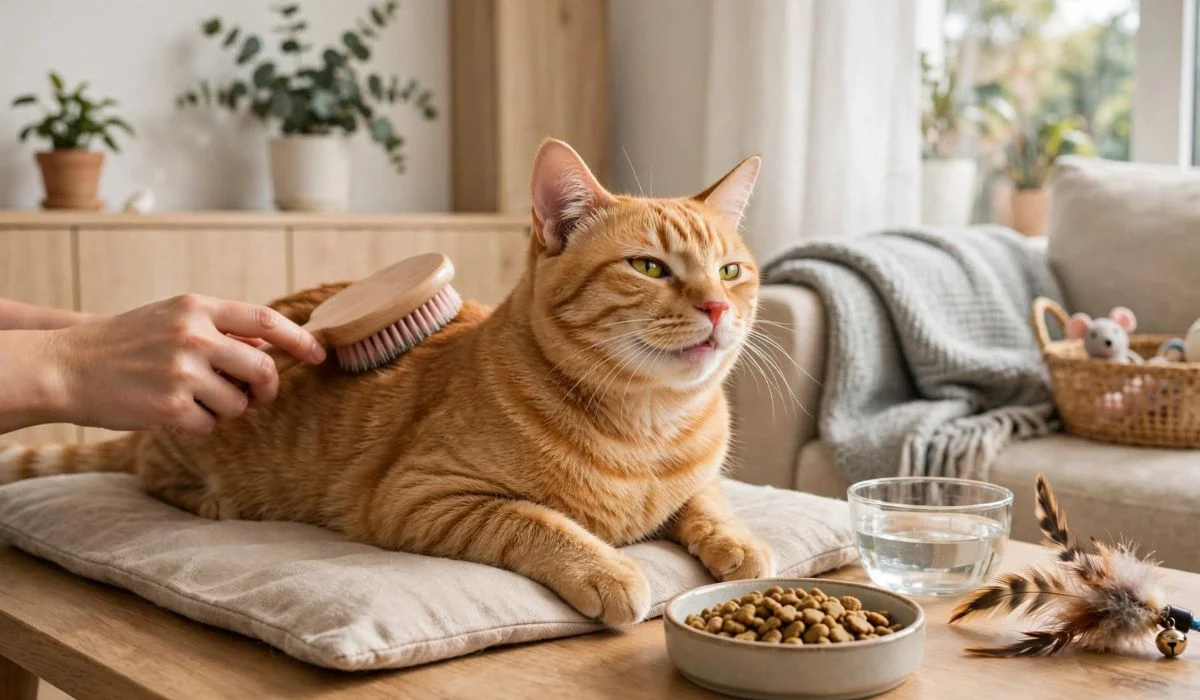
Even cats that groom themselves benefit from occasional grooming. The amount required depends on coat length, age, health, and individual grooming habits.
Brush According to Coat Type
Short-haired cats may need less frequent brushing, while long-haired cats generally require more regular grooming to reduce tangles and mats.
Brushing also gives you an opportunity to notice unusual lumps, skin changes, parasites, or areas of sensitivity.
Take Care of Claws
Indoor cats may need their claws trimmed periodically. Use cat-specific nail clippers and trim only the sharp tip, avoiding the quick.
If you are uncomfortable trimming claws, ask a veterinarian or professional groomer to demonstrate the process.
Take Your Cat for Regular Veterinary Care
Indoor living does not eliminate the need for veterinary care. Indoor cats can still develop dental disease, obesity, parasites, infections, urinary problems, and other health conditions.
Keep Vaccinations and Preventive Care Current
Your veterinarian can recommend vaccinations and parasite prevention based on your cat’s age, lifestyle, geographic area, and individual risk factors.
Even cats that never go outside can potentially encounter infectious agents or parasites.
Schedule Routine Health Checks
Regular veterinary examinations can help identify health problems before they become more serious. The appropriate schedule depends on your cat’s age and health.
Senior cats may need more frequent monitoring than young adult cats.
Pay Attention to Dental Health
Dental care is often overlooked when learning how to take care of an indoor cat. Oral disease can cause discomfort and may affect a cat’s ability to eat normally.
Introduce Tooth Brushing Slowly
If your veterinarian recommends brushing, introduce the process gradually. Use toothpaste specifically formulated for cats rather than human toothpaste.
Never force brushing aggressively, especially if your cat becomes frightened or defensive.
Help Your Cat Maintain a Healthy Weight
Weight management is especially important for cats that spend their entire lives indoors. Excess body weight can increase the risk of several health problems.
Monitor Body Condition
Instead of relying only on the number shown on a scale, your veterinarian can evaluate your cat’s body condition and determine whether its weight is appropriate.
Measure meals rather than guessing portions, and account for treats when planning your cat’s daily food intake.
Build a Predictable Daily Routine
Cats often benefit from predictable routines. Feeding, playtime, grooming, and quiet periods can happen at roughly consistent times each day.
A routine can also make it easier for you to notice changes in appetite, energy, litter box habits, or behavior.
Spend Quality Time Together
Not every cat wants constant cuddling. Some prefer sitting nearby, playing, or simply sharing the same room.
Allow your cat to choose how much physical interaction it wants. Respecting boundaries can help build trust.
Introduce New Things Gradually
Changes such as moving furniture, introducing another pet, changing food, or moving to a new home can be stressful for cats.
Give Your Cat a Safe Retreat
When something changes, provide a quiet room or secure hiding area where your cat can retreat. Allow the cat to explore new surroundings at its own pace.
Never force a frightened cat into unfamiliar situations unless necessary for immediate safety or veterinary care.
Keep Your Indoor Cat Safe From Toxic Plants
Some common household plants can be dangerous to cats. Before bringing a plant into your home, verify that it is safe for cats.
Be Especially Careful With Lilies
True lilies and daylilies can be extremely dangerous to cats, and exposure can result in severe kidney injury. Keep potentially toxic plants completely away from cats and seek veterinary help immediately if exposure occurs.
Watch for Signs That Something Is Wrong
Cats are known for hiding signs of illness, so subtle changes deserve attention.
Look for changes in eating, drinking, grooming, sleeping, activity, vocalization, social behavior, weight, or litter box use.
Contact a Veterinarian When Behavior Changes Suddenly
A sudden behavioral change can sometimes have a medical cause. If your normally social cat begins hiding constantly or your active cat becomes unusually lethargic, consult your veterinarian.
Make Your Home Cat-Friendly
A cat-friendly home does not need to be enormous. Even a small apartment can provide enrichment when space is organized thoughtfully.
Create vertical areas, scratching stations, hiding spots, resting places, play zones, and accessible resources.
Consider Vertical Space
Cat trees, shelves designed for pets, and secure elevated resting areas can increase usable territory without requiring additional floor space.
Always make sure elevated structures are securely installed and cannot fall.
A Simple Indoor Cat Care Routine
A practical daily routine might include fresh water, measured meals, litter box maintenance, interactive play, and observation of your cat’s general behavior.
Weekly tasks can include deeper litter box cleaning, washing bedding, rotating toys, and checking scratching equipment.
Monthly or scheduled tasks may include grooming, weight monitoring, and reviewing preventive care needs.
Frequently Asked Questions
How do I take care of an indoor cat?
Provide complete and balanced nutrition, fresh water, clean litter boxes, daily exercise, mental enrichment, scratching opportunities, grooming, routine veterinary care, dental care, and a safe environment.
Do indoor cats need vaccines?
Indoor cats may still need vaccinations because disease exposure can occur through veterinary visits, other animals, people, or unexpected contact with infectious agents. Your veterinarian can recommend an appropriate vaccination schedule.
How often should I feed my indoor cat?
Feeding frequency depends on the cat’s age, health, food type, and individual needs. Many adult cats do well with measured meals divided into two or more feedings, but follow your veterinarian’s advice.
How much exercise does an indoor cat need?
There is no universal number that works for every cat. Several short interactive play sessions throughout the day can provide useful physical and mental stimulation.
How often should I clean my cat’s litter box?
Remove urine clumps and feces regularly, ideally at least once daily or more often when necessary. Completely changing and cleaning the box depends on the litter type and household circumstances.
Do indoor cats get bored?
They can. Without enough stimulation, some indoor cats may become inactive, overweight, destructive, or develop unwanted behaviors. Toys, climbing areas, scratching posts, puzzle feeders, and interactive play can help.
Should an indoor cat have a scratching post?
Yes. Scratching is a normal feline behavior, so providing appropriate scratching surfaces gives your cat a safe place to perform it.
Can an indoor cat be happy?
Absolutely. Indoor cats can live happy, enriched lives when their physical, behavioral, social, and environmental needs are met.
How can I tell if my indoor cat is healthy?
Healthy cats generally maintain appropriate body condition, eat and drink normally, groom themselves, use the litter box consistently, and show their usual level of activity and behavior. Regular veterinary examinations are also important.
Do indoor cats need flea prevention?
Indoor cats can still encounter fleas and other parasites. Ask your veterinarian whether preventive treatment is appropriate for your cat based on its individual risk.