What To Feed Mother Cat After Giving Birth Homemade | Best Nutritious Foods
After giving birth, a mother cat needs plenty of calories, protein, fluids, vitamins, and minerals to recover from delivery and produce milk for her kittens. Choosing what to feed mother cat after giving birth homemade can be tempting, especially when you want to provide fresh, wholesome foods.
However, homemade food should usually supplement rather than replace a complete, nutritionally balanced cat food. Cats have specific nutritional requirements, and an unbalanced homemade diet can lead to deficiencies—particularly when a mother is nursing several kittens.
This guide explains safe homemade food options, what to avoid, how to support milk production, and how to build a practical feeding routine for a nursing mother cat.
What a Mother Cat Needs After Giving Birth
Lactation is one of the most nutritionally demanding periods in a cat’s life. A nursing mother may need substantially more food than she did before pregnancy.
Her diet should provide:
- High-quality animal protein
- Adequate calories
- Essential amino acids
- Appropriate fats
- Calcium and phosphorus in balanced amounts
- Vitamins and minerals
- Plenty of fresh water
- A nutritionally complete foundation diet
The mother should be able to eat enough to maintain her body condition while producing milk for her kittens.
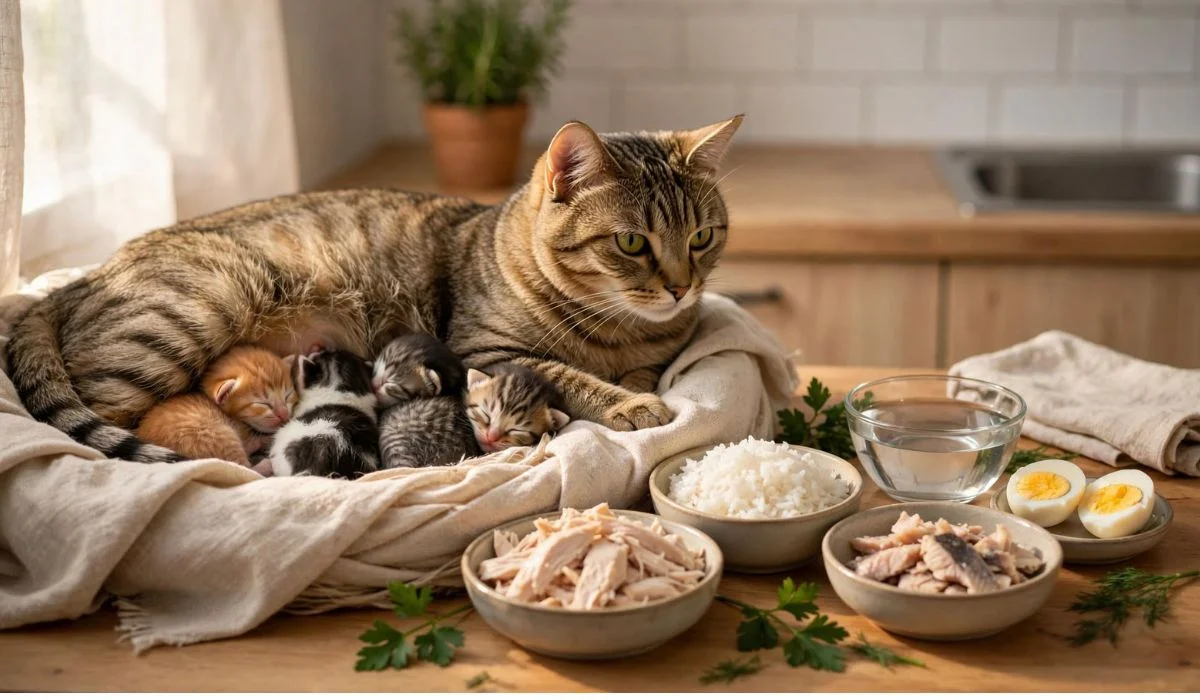
Best Homemade Foods for a Mother Cat After Giving Birth
Homemade ingredients can be useful as small additions to a complete diet.
Plain Cooked Chicken
Plain cooked chicken is one of the simplest options.
Use:
- Boneless chicken
- Thoroughly cooked meat
- No salt
- No seasoning
- No onion or garlic
- No sauces
- No butter or spicy ingredients
Shredded chicken can be mixed with the cat’s regular food or offered as a small additional portion.
Cooked Turkey
Plain cooked turkey can also provide animal protein.
Choose lean, fully cooked meat without seasoning or gravy. Remove bones and avoid processed turkey products because they may contain excessive sodium or other ingredients unsuitable for cats.
Cooked Eggs
Fully cooked eggs can provide protein and calories.
Serve a small amount of plain cooked egg without salt, butter, oil, seasoning, or sauces.
Egg should be an addition to the diet rather than the primary food.
Plain Cooked Fish
Some cats enjoy cooked fish, but it should be offered carefully.
Choose plain, fully cooked fish with all bones removed. Avoid heavily salted, smoked, fried, seasoned, or canned fish prepared for humans.
Fish should not become the sole protein source because cats require a balanced range of nutrients.
Small Amounts of Cooked Organ Meat
Organ meats contain concentrated nutrients, but more is not necessarily better.
If you want to include liver or another organ meat, keep the quantity modest and avoid making it a major part of the homemade diet. Excessive liver consumption can provide excessive vitamin A over time.
Homemade Food Ideas for a Nursing Cat:
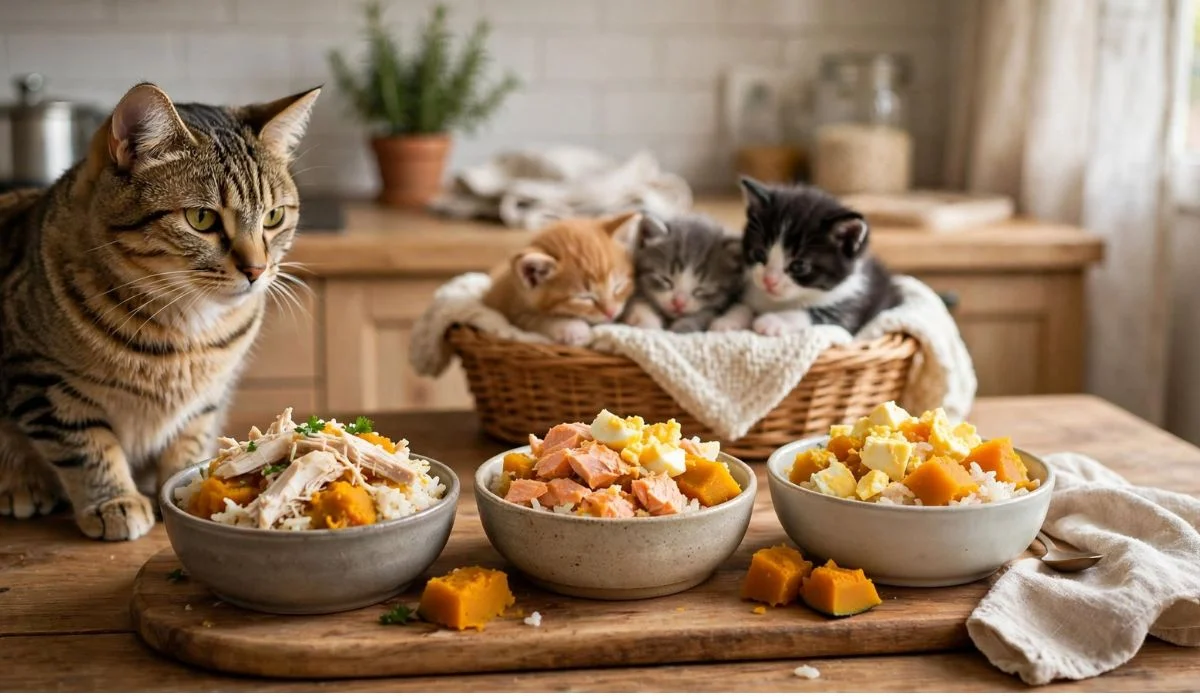
If you’re looking for simple options, consider these as toppers or occasional additions rather than complete meals.
Chicken and Egg
A small amount of plain cooked chicken mixed with a little cooked egg can provide additional protein.
Do not add salt, spices, onion, garlic, butter, or sauces.
Turkey and Complete Cat Food
Mix a small amount of plain cooked turkey into the mother’s regular complete kitten or lactation-appropriate food.
This can make the meal more appealing while keeping the nutritionally balanced food as the foundation.
Chicken With Warm Water
Adding a little warm water to wet cat food can increase moisture intake and make the meal easier to eat.
This is particularly useful if the mother is not drinking much separately.
Read Next: How To Take Care Of Newborn Kittens
Can Homemade Food Replace Cat Food After Giving Birth?
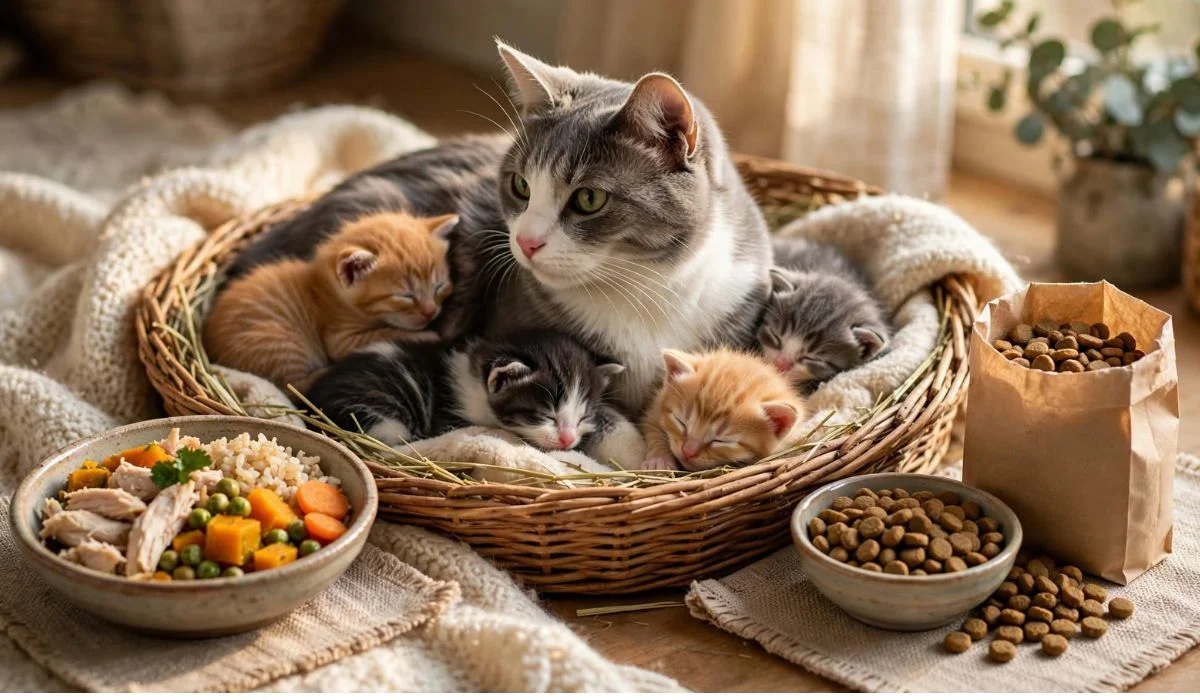
Generally, not without professional formulation.
Cats require nutrients that aren’t easily supplied in the correct proportions through ordinary household foods.
Why a Homemade-Only Diet Can Be Risky
A diet consisting mainly of chicken, meat, eggs, or fish may look nutritious but still be deficient or imbalanced.
Potential problems can involve:
- Calcium
- Taurine
- Certain vitamins
- Essential fatty acids
- Trace minerals
- Appropriate calcium-to-phosphorus balance
These nutritional issues are especially important for a nursing mother because she is also providing nutrients to her kittens through milk.
Use Complete Cat Food as the Foundation
A complete and balanced food formulated for kittens or growth/reproduction is generally a better foundation for a nursing mother than an improvised homemade diet.
You can use safe homemade foods as additions if they do not displace too much of the nutritionally complete diet.
How Much Should a Mother Cat Eat After Giving Birth?
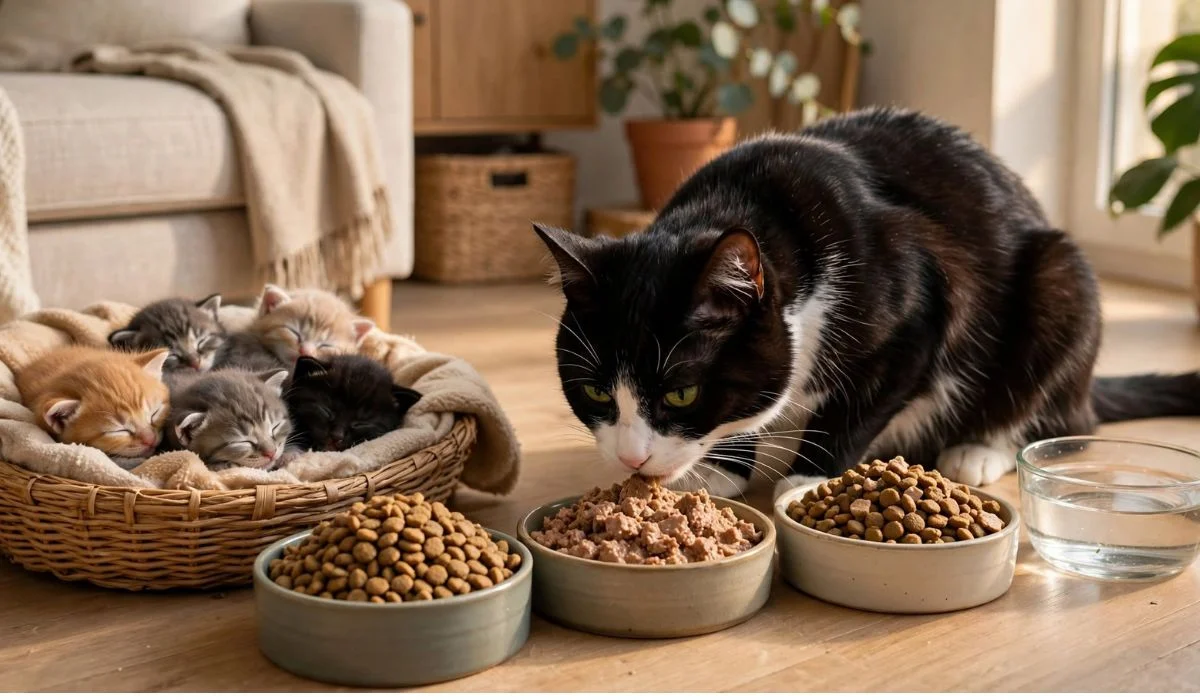
There isn’t one universal amount because food requirements depend on the mother’s size, body condition, number of kittens, type of food, and stage of lactation.
Let Her Appetite Guide Feeding
A nursing mother often needs considerably more food than an adult cat that isn’t pregnant or nursing.
Rather than restricting her to a small number of meals, many veterinary nutrition recommendations support providing frequent meals or allowing appropriate access to food during lactation.
Monitor her body condition and discuss feeding amounts with your veterinarian.
Feed More as the Kittens Grow
As kittens grow and consume more milk, the mother’s energy requirements can increase.
This means the amount she needs during the first days after delivery may not be the same as what she needs several weeks later.
Hydration Is Extremely Important
Milk production requires water, so fresh water should always be available.
Encourage Water Intake
Keep several clean water bowls near areas where the mother spends time.
Wet food can also contribute significantly to overall water intake.
Avoid forcing water into her mouth.
Try Moist Meals
If she enjoys wet food, adding a little water can increase moisture intake without changing the meal dramatically.
Foods You Should Never Give a Mother Cat
Some human foods can be dangerous for cats.
Avoid These Ingredients
Do not intentionally feed:
- Onion
- Garlic
- Chives
- Chocolate
- Alcohol
- Caffeinated drinks
- Grapes and raisins
- Xylitol-containing products
- Raw yeast dough
- Excessively salty foods
- Heavily seasoned foods
- Cooked bones
- Spoiled food
Fatty, spicy, or heavily processed foods can also cause digestive problems.
Be Careful With Bones
Never give cooked bones.
They can splinter and cause serious injuries or intestinal obstruction.
Even when feeding cooked meat, remove all bones before serving.
Should a Mother Cat Drink Milk?
Despite the common image of cats drinking milk, ordinary cow’s milk isn’t necessary for a nursing mother and can cause digestive upset in some cats.
Fresh Water Is the Better Choice
A nursing cat should have constant access to fresh, clean water.
Her kittens receive milk from her, while she should obtain hydration primarily through water and moisture-containing foods.
What About Raw Homemade Food?
Raw diets require careful nutritional formulation and food-safety management.
Why Raw Food Can Be Problematic
Raw meat can carry pathogens that may affect cats and people in the household. A homemade raw diet can also become nutritionally unbalanced if it isn’t professionally formulated.
For a mother cat recovering from birth and nursing kittens, a nutritionally complete commercial diet is generally a simpler and safer foundation.
If you want to feed a homemade diet long term, ask your veterinarian about working with a veterinary nutrition professional to formulate it properly.
A Simple Feeding Routine After Birth
A practical routine can make caring for a new mother much easier.
Morning
Offer a generous portion of complete kitten or lactation-appropriate food along with fresh water.
You can add a small amount of plain cooked chicken if she enjoys it.
Afternoon
Provide another meal or allow appropriate access to food according to your veterinarian’s recommendations.
Check that the mother is eating normally and returning to her kittens comfortably.
Evening
Offer another nutritious meal and refresh her water.
A small amount of plain cooked turkey or egg can be used as an occasional topper.
Overnight
Nursing mothers may eat frequently, so having appropriate food available can be useful, particularly when kittens are very young.
How to Tell if the Mother Cat Is Eating Enough
Food intake is only one part of assessing a nursing cat’s health.
Watch Her Body Condition
A mother cat may naturally lose some body reserves while nursing, but significant weight loss is concerning.
Contact your veterinarian if she becomes noticeably thin, weak, lethargic, or uninterested in food.
Watch the Kittens Too
The kittens can provide clues about whether things are going well.
Healthy kittens generally nurse regularly, sleep comfortably, and show appropriate growth.
If kittens consistently cry, fail to nurse, or aren’t gaining weight, the mother and litter should be evaluated.
Postpartum Warning Signs in a Mother Cat
Nutrition cannot solve every postpartum problem.
Contact a Veterinarian If She Has
- Loss of appetite
- Severe lethargy
- Repeated vomiting
- Persistent diarrhea
- Fever
- Difficulty breathing
- Tremors
- Seizures
- Painful or swollen mammary glands
- Abnormal or foul-smelling discharge
- Continued straining
- Sudden refusal to care for her kittens
Some postpartum conditions can become emergencies, so prompt veterinary care is important.
Homemade Food Mistakes to Avoid
Feeding Only Chicken
Chicken is nutritious but isn’t a complete diet for cats. Feeding chicken alone for an extended period can cause nutritional deficiencies.
Adding Too Many Treats
Even healthy homemade foods can displace nutritionally complete food if offered in excessive quantities.
Using Seasonings
Human meals frequently contain salt, onion, garlic, sauces, and spices. These should not be added to homemade food for cats.
Giving Cooked Bones
Cooked bones can splinter and cause potentially serious injuries.
Suddenly Changing Her Diet
A sudden dietary change can cause digestive upset. Introduce additions gradually and monitor her stool and appetite.
When to Choose a Professionally Formulated Homemade Diet
Some owners prefer feeding homemade diets for long-term reasons.
Work With a Veterinary Nutrition Professional
A properly formulated homemade diet needs to account for the cat’s life stage, calories, protein, fat, essential amino acids, vitamins, minerals, and other nutritional requirements.
This is particularly important for a pregnant or nursing cat because her nutritional demands are unusually high.
Frequently Asked Questions
What is the best homemade food for a mother cat after giving birth?
Plain, fully cooked chicken, turkey, or egg can be offered as small additions to a complete and balanced cat diet. Homemade food alone should not generally replace nutritionally complete food unless the recipe has been professionally formulated.
Can I feed a nursing cat boiled chicken?
Yes. Plain, fully cooked, boneless chicken can be an appropriate occasional addition. Do not add salt, onion, garlic, spices, butter, or sauces.
Can a mother cat eat eggs after giving birth?
A small amount of fully cooked plain egg can provide additional protein. It should be an addition rather than the main diet.
Should I give my nursing cat milk?
Usually, no. Cow’s milk isn’t necessary and may cause digestive upset. Fresh water and moisture-rich cat food are better choices for hydration.
What should a mother cat eat to produce more milk?
The most important factor is adequate overall nutrition and hydration. A complete, calorie-dense food appropriate for kittens or reproduction can help meet the increased nutritional demands of lactation. If milk production appears inadequate, consult a veterinarian rather than relying on specific homemade foods.
Can I feed my cat only homemade food while she is nursing?
It’s not recommended unless the diet has been specifically formulated to be complete and balanced for a lactating cat. Simple meat-based recipes can be deficient in essential nutrients.
Can nursing cats eat rice?
A small amount of plain cooked rice isn’t inherently toxic to cats, but it doesn’t provide the complete nutrition a nursing mother needs. Animal-based, nutritionally complete food should remain the dietary foundation.
Can I give a mother cat fish after giving birth?
Plain, fully cooked, boneless fish can occasionally be offered. Avoid raw, smoked, heavily salted, seasoned, or fried fish and don’t use fish as the sole food source.
How often should I feed a mother cat after giving birth?
Nursing mothers have high energy needs and may benefit from frequent meals or appropriate access to food. The ideal amount depends on her size, condition, number of kittens, and food type.
Why is my mother cat not eating after giving birth?
A temporary reduction in appetite can occur, but a mother cat that refuses food, appears weak, vomits, has abnormal discharge, or otherwise seems unwell should be evaluated by a veterinarian promptly.


