
When Do Kittens Start Eating Food and Drinking Water? Guide
Watching kittens grow from tiny, milk-dependent newborns into playful little cats is an exciting process. One of the biggest milestones is learning when kittens start eating food and drinking water on their own.
Most kittens begin showing interest in solid food at around 3 to 4 weeks of age. They gradually learn to eat wet or softened kitten food while continuing to nurse from their mother. Around the same period, kittens may also begin experimenting with drinking water.
The transition does not happen overnight. Young kittens slowly become less dependent on mother’s milk as their teeth, digestive system, coordination, and appetite develop. By approximately 7 to 8 weeks, most healthy kittens can eat solid kitten food and drink water independently.
Understanding this timeline can help you know what to offer your kitten and when to expect changes in eating and drinking habits.
When Do Kittens Start Eating Solid Food?
Kittens commonly begin exploring solid food at approximately 3 to 4 weeks old.
At this age, they become more active and curious. A kitten may sniff its mother’s food, lick food from a dish, or try to imitate the mother cat while eating.
Early eating is a learning process
A kitten that first encounters solid food may not immediately know what to do with it. It may walk through the dish, lick food from its paws, or simply play with it.
This is normal. Eating is a new skill, and kittens need time to develop coordination.
Initially, solid food supplements mother’s milk rather than replacing it completely.
When Do Kittens Start Drinking Water?
Kittens may begin experimenting with water at around 3 to 4 weeks of age, particularly as they start eating solid food.
However, very young kittens that are still primarily nursing receive much of their hydration from mother’s milk.
Water becomes more important during weaning
As kittens eat more solid food and nurse less frequently, having access to fresh drinking water becomes increasingly important.
A shallow, stable dish can make it easier for a young kitten to reach the water without struggling.
Kitten Feeding and Drinking Timeline
Every kitten develops somewhat differently, but a general timeline can make the transition easier to understand.
Birth to 2 weeks
Newborn kittens depend almost entirely on their mother for nutrition and hydration.
They nurse frequently and are not ready to eat ordinary solid food or drink water independently.
Around 3 weeks
Kittens become more mobile and curious.
They may begin investigating food and water, although nursing remains a major part of their nutrition.
Around 4 weeks
This is often the beginning of more noticeable weaning.
Kittens can start eating small amounts of soft kitten food while continuing to nurse. They may also begin learning to lap water.
Around 5 to 6 weeks
Kittens generally become more comfortable eating solid food.
They gradually consume more kitten food and nurse less. Water should remain available throughout the day.
Around 7 to 8 weeks
Most healthy kittens can eat kitten food and drink water independently.
They may no longer rely on their mother’s milk for their nutritional needs, although individual kittens can progress at slightly different rates.
What Food Should You Give a Weaning Kitten?
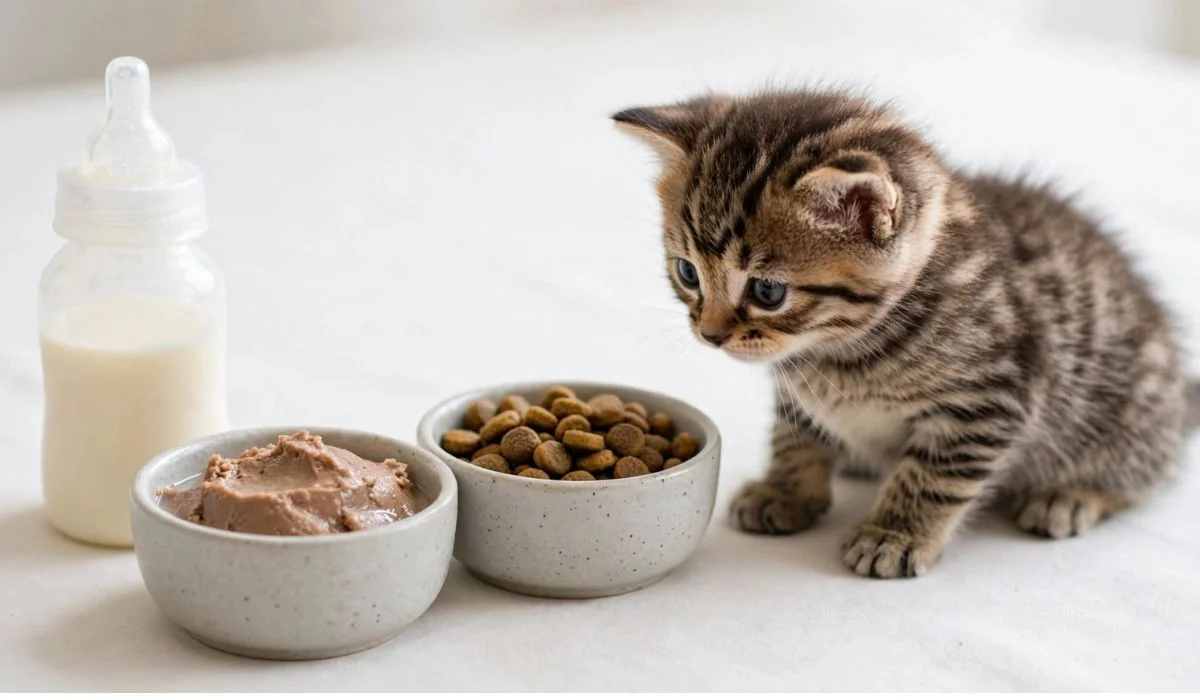
Once a kitten begins showing interest in food, offer a complete and balanced food formulated specifically for kittens.
Kittens have high nutritional requirements because they are growing rapidly. Food designed for adult cats may not provide the same nutritional profile needed during kittenhood.
Start with an easy-to-eat texture
Wet kitten food is often convenient for young kittens because it is soft and easier to manage.
For very young kittens beginning the weaning process, food may be softened with an appropriate kitten milk replacer or warm water if needed. The texture should make it easier for the kitten to lap rather than requiring difficult chewing.
As the kitten develops, the food can gradually become less soft.
Read Next: When Do Kittens Stop Drinking Milk
How Do You Teach a Kitten to Eat Food?
Most kittens learn by instinct and observation, but gentle encouragement can help.
Place a small amount of kitten food in a shallow dish and allow the kitten to investigate it.
Let the kitten explore
A kitten may sniff the food repeatedly before taking a bite.
You can gently touch a tiny amount of food to the kitten’s lips if needed, but avoid forcing food into its mouth.
Patience is usually more useful than pressure.
How Do You Teach a Kitten to Drink Water?
Learning to drink from a bowl can take some practice.
Use a clean, shallow dish containing fresh water and place it somewhere the kitten can easily access.
Keep the water bowl kitten-friendly
Choose a low-sided dish that is stable and difficult to tip over.
Keep it away from the litter box and clean it regularly. Some kittens prefer fresh water and may be more willing to drink when the bowl is refreshed frequently.
Never force a kitten’s face into a water bowl.
Do Kittens Need Water If They Still Drink Milk?
Kittens that are actively nursing receive substantial fluid from their mother’s milk. As they transition to solid food, however, they should have access to fresh water.
Water and wet food
Kittens eating wet food may drink less water from a bowl because wet food contains significant moisture.
That does not mean water should be removed. Fresh drinking water should remain available.
Can Kittens Drink Cow’s Milk?
Cow’s milk is not a suitable replacement for mother’s milk or a complete kitten diet.
After the early nursing period, cats can become less able to digest lactose, and cow’s milk does not contain the right nutritional balance for a growing kitten.
What if a kitten has no mother?
If a very young kitten is orphaned or cannot nurse, it may need a commercial kitten milk replacer rather than ordinary milk.
Young orphaned kittens have specialized feeding needs, so veterinary guidance is particularly important.
How Much Food Should a Young Kitten Eat?
The amount a kitten needs depends on factors such as age, body size, activity level, health, and the calorie content of the food.
Rather than using one amount for every kitten, follow the feeding instructions on the kitten food packaging and your veterinarian’s recommendations.
Small meals are often practical
Young kittens have small stomachs and high energy needs. During weaning, they generally benefit from several small meals rather than relying on one large meal.
As kittens grow, their feeding requirements change.
How Often Should Kittens Eat?
During the weaning period, kittens usually need multiple opportunities to eat throughout the day.
A kitten that is just learning to eat may consume only a small amount at a time.
Observe the whole litter
When several kittens are eating together, stronger or more confident kittens may push others away from the food.
Make sure quieter kittens have access to food and can eat without being crowded.
Why Is My Kitten Not Drinking Water?
A kitten that has recently started eating wet food may not appear to drink much water. This can be normal because wet food provides moisture.
However, a kitten that is not drinking and also shows signs of illness deserves attention.
Watch for other changes
Contact a veterinarian if a kitten has poor appetite, unusual tiredness, vomiting, diarrhea, dry or sticky gums, weakness, or other concerning symptoms.
Very young kittens can become dehydrated or unwell more quickly than adult cats.
Why Is My Kitten Not Eating Solid Food?
Some kittens need more time to become comfortable with solid food.
If the kitten is still nursing and is only beginning the weaning process, a gradual transition can be normal.
When refusal becomes concerning
A young kitten that completely refuses food, is no longer nursing, or appears weak should not simply be left without nutrition while waiting for it to start eating.
Veterinary advice is appropriate, especially for very young kittens.
Should Kittens Still Nurse While Eating Food?
Yes.
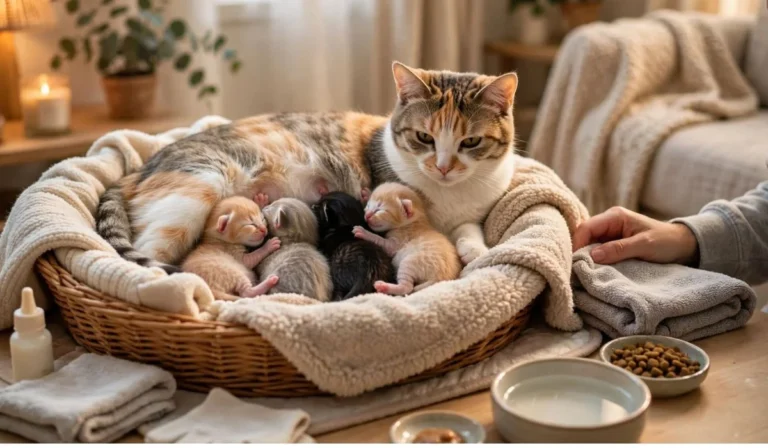
When kittens first begin eating solid food, they generally continue nursing from their mother. This is an important part of the gradual weaning process.
Weaning happens step by step
At first, kittens may take only a few bites of food. Over time, they eat more and nurse less.
By approximately 7 to 8 weeks, many kittens are eating independently and are largely or completely weaned.
What Does Healthy Weaning Look Like?
Healthy weaning is a gradual change rather than a single event.
You may notice that your kitten:
- Shows curiosity about food
- Starts licking soft kitten food
- Gradually eats larger portions
- Nurses less frequently
- Begins drinking from a water dish
- Becomes more active and playful
- Continues gaining weight and developing normally
Look at progress rather than one meal
A kitten may eat very little during its first few attempts at solid food. What matters is the overall pattern over several days.
If the kitten continues developing normally and gradually increases its food intake, the transition is generally progressing as expected.
Common Mistakes to Avoid During Weaning
The first few weeks of feeding can be confusing, especially if you have never raised kittens before.
Introducing solid food too aggressively
Do not expect a three- or four-week-old kitten to immediately replace all milk with solid food.
The transition should be gradual.
Offering inappropriate human foods
Kittens need food formulated to meet their specific nutritional requirements. Table scraps are not an appropriate foundation for a growing kitten’s diet.
Removing water
Even if a kitten drinks very little water because it eats wet food, fresh water should still be accessible.
Forcing food or water
Never force a kitten’s mouth into food or water. This can create stress and may cause problems if food or liquid is accidentally inhaled.
When Should Kittens Be Fully Weaned?
Most kittens are fully weaned at approximately 7 to 8 weeks of age, although the exact timing can vary.
By this stage, a healthy kitten should generally be able to eat appropriate solid food and drink water independently.
Being weaned does not mean being ready for every change
A kitten may be nutritionally independent before it has finished developing socially.
Continuing to spend time with its mother and littermates helps kittens learn normal feline behaviors and communication.
What If a Kitten Starts Eating Food but Won’t Drink Water?
This is not always a problem, particularly if the kitten is eating wet food.
Wet kitten food contains a considerable amount of moisture, so a kitten may satisfy much of its fluid requirement through food.
Keep monitoring hydration and behavior
Continue offering clean water and watch the kitten’s appetite, energy, urination, and general behavior.
If you notice signs of illness or possible dehydration, seek veterinary advice.
When Should You Contact a Veterinarian?
Most kittens move through weaning without major problems, but certain situations require professional attention.
Contact a veterinarian if a young kitten:
- Stops nursing unexpectedly
- Refuses food
- Cannot keep food down
- Has repeated diarrhea or vomiting
- Becomes unusually weak or sleepy
- Is not gaining weight appropriately
- Shows signs of dehydration
- Has difficulty swallowing or eating
- Appears generally unwell
A veterinarian can determine whether the problem is related to feeding, illness, parasites, or another condition.
The Bottom Line
Kittens generally start exploring solid food at around 3 to 4 weeks old and may begin learning to drink water around the same time. The transition then continues gradually as they eat more food and rely less on their mother’s milk.
By approximately 7 to 8 weeks, most healthy kittens can eat kitten food and drink water independently.
The key is to allow the process to happen gradually. Provide nutritionally complete kitten food, fresh water, and a calm environment, while continuing to monitor each kitten’s growth and behavior.
FAQs About Kittens Eating Food and Drinking Water
At what age do kittens start eating food?
Most kittens begin exploring solid food at about 3 to 4 weeks of age. They usually continue nursing while learning to eat.
When do kittens start drinking water?
Kittens may begin experimenting with water at around 3 to 4 weeks, especially as they begin eating solid food. Their need to drink from a bowl increases as they become less dependent on mother’s milk.
Can a 4-week-old kitten eat solid food?
Yes. Around 4 weeks, kittens can begin the weaning process and may eat small amounts of soft kitten food while continuing to nurse.
Can a 5-week-old kitten drink water?
Yes. A 5-week-old kitten can begin learning to drink water from a shallow bowl. Fresh water should be available as the kitten becomes more independent from its mother.
What should a 4-week-old kitten eat?
A 4-week-old kitten can begin eating soft, complete kitten food. At this stage, food is introduced gradually while the kitten continues nursing.
Do kittens need milk after they start eating food?
During early weaning, kittens usually continue nursing even after they begin eating solid food. Mother’s milk gradually becomes less important as solid food intake increases.
Should I give my kitten cow’s milk?
No. Cow’s milk is not an appropriate substitute for mother’s milk or a complete kitten diet. If a very young kitten needs milk because its mother is unavailable, a veterinarian can recommend an appropriate kitten milk replacer.
How can I get my kitten to drink water?
Provide fresh water in a shallow, stable bowl that is easy to access. Keep the bowl clean and avoid forcing the kitten to drink.
Is it normal for a kitten to eat wet food but barely drink water?
It can be normal. Wet food contains substantial moisture, so kittens eating it may drink less from a water bowl than kittens eating mostly dry food.
When can kittens eat food without their mother?
Many kittens can eat independently by around 7 to 8 weeks. However, nutritional independence and separation from the mother are separate issues, and kittens benefit from appropriate social development with their mother and littermates.
How do I know if my kitten is ready for weaning?
Interest in solid food, increased activity, developing teeth, and attempts to eat from a dish are common signs that a kitten is entering the weaning stage.
What if my kitten is not eating or drinking?
A young kitten that is not nursing, eating, or drinking can become unwell quickly. If the kitten refuses food or water, appears weak, or shows other signs of illness, contact a veterinarian promptly.