How To Take Care Of Newborn Kittens With Mother At Home | Safe Kitten Care
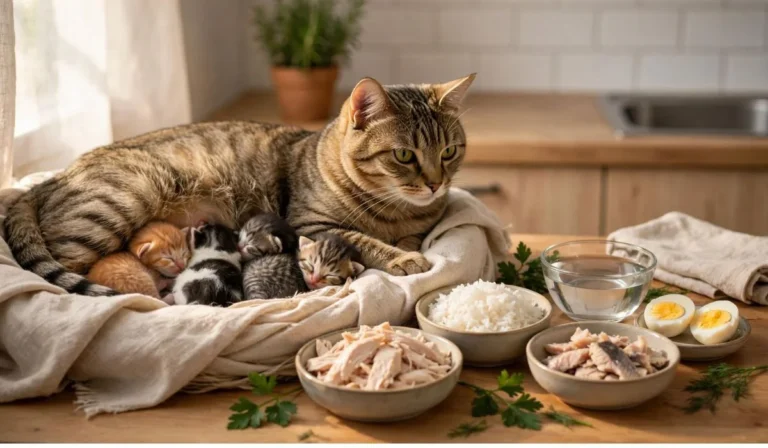
Learning how to take care of newborn kittens with mother at home is mostly about creating the right environment and allowing the mother cat to do what she naturally does best. Healthy mother cats usually provide their kittens with warmth, milk, grooming, stimulation, and protection.
Your role is to keep the family safe, support the mother, monitor the kittens’ growth, and recognize signs that something may be wrong. Newborn kittens are especially fragile during their first few weeks, so small changes in appetite, temperature, behavior, or weight deserve attention.
This practical guide covers newborn kitten care at home from the first days after birth through the early weeks of development.
What Newborn Kittens Need at Home
Newborn kittens depend heavily on their mother. During the first weeks, they generally need:
- Mother’s milk
- A warm, dry sleeping area
- A quiet environment
- Regular nursing
- Gentle monitoring
- Clean bedding
- Protection from other animals
- Appropriate veterinary care
- Gradual socialization as they grow
If the mother is healthy and caring for the kittens normally, you generally don’t need to take over her responsibilities.
Create a Safe Nesting Area
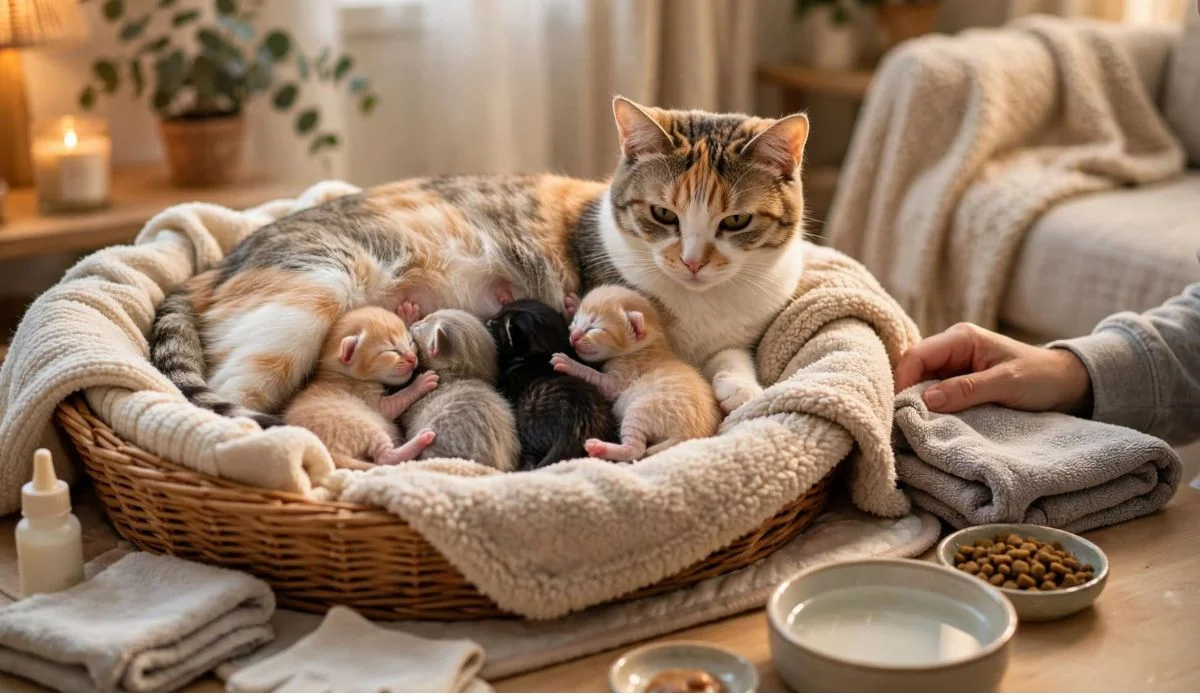
The first step in learning how to take care of newborn kittens with mother at home is preparing a comfortable nesting space.
Choose a Quiet Room
Select a calm room with limited household traffic. Keep loud noises, children, and other pets away from the nest.
The mother should be able to leave the nest to eat, drink, and use the litter box while still feeling secure.
A quiet environment can also reduce stress for a protective mother cat.
Use a Comfortable Nest
A sturdy box, pet bed, or appropriately sized nesting area can work well.
The sides should be high enough to keep young kittens safely contained but low enough for the mother to enter and leave easily.
Use clean, washable bedding that doesn’t have loose threads or openings where kittens could become trapped.
Keep the Area Warm
Newborn kittens cannot regulate their body temperature as effectively as older cats. Their mother provides significant warmth by staying close to them.
Keep the room comfortably warm and away from drafts.
If additional heat is necessary, use a safe heating source carefully and ensure the kittens can move away from it. Direct contact with very hot heating pads can cause burns or overheating.
Let the Mother Cat Nurse Her Kittens:
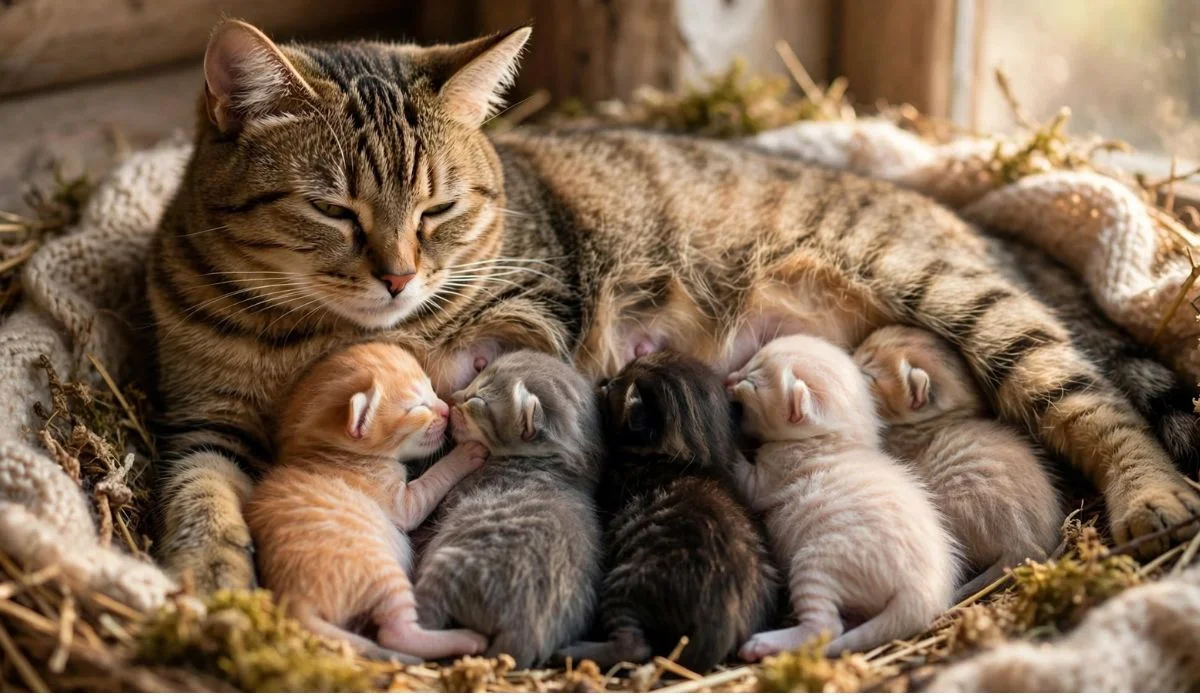
A healthy mother is usually the kittens’ best source of nutrition.
Watch Without Constantly Interfering
Observe the kittens periodically to make sure they are nursing.
You should generally see kittens:
- Searching for a nipple
- Nursing regularly
- Sleeping after feeding
- Remaining close to their mother
- Becoming progressively more active as they age
Avoid repeatedly removing kittens from their mother simply to check them.
Make Sure Smaller Kittens Get a Chance to Nurse
Sometimes stronger kittens may compete more effectively for nipples.
If one kitten consistently struggles to nurse or is pushed away, monitor that kitten especially carefully and contact a veterinarian for guidance.
Do not automatically begin supplemental feeding without determining why the kitten isn’t nursing properly.
Feed the Mother Cat Properly:
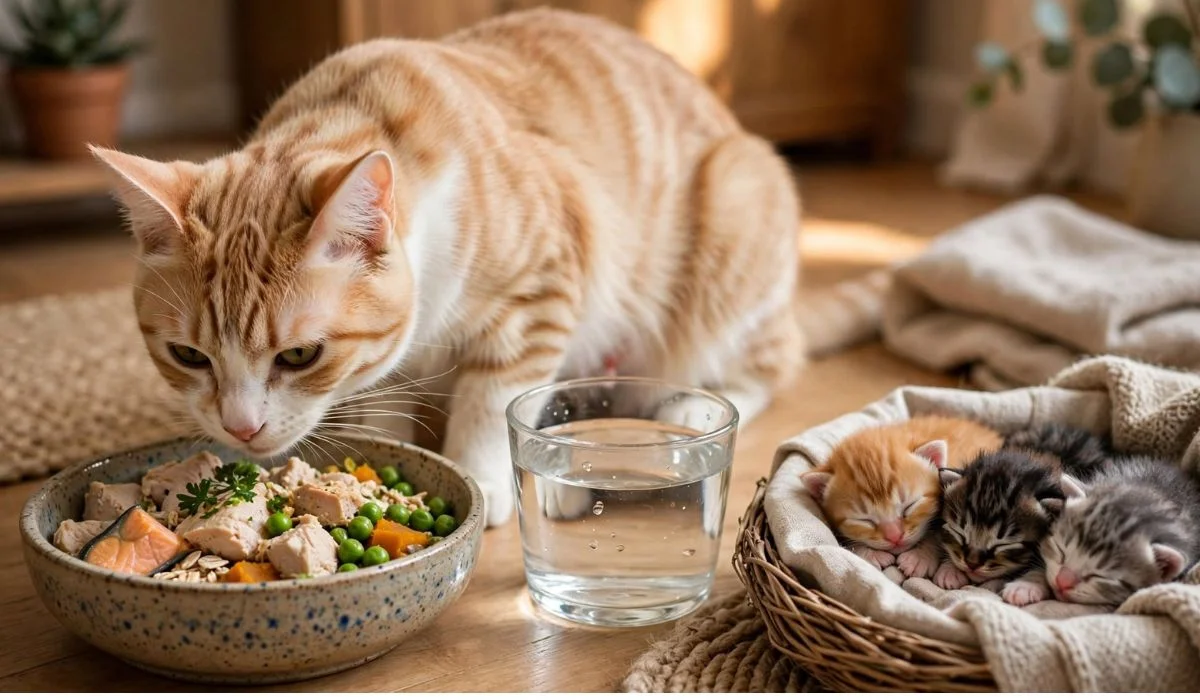
Caring for newborn kittens also means taking care of their mother.
Provide Nutrient-Rich Food
A nursing mother has high energy and nutrient requirements. A complete and balanced food formulated for kittens or growth/reproduction is commonly appropriate during lactation.
Follow your veterinarian’s advice and the food’s feeding recommendations.
She may need significantly more food than a non-pregnant adult cat.
Keep Fresh Water Available
Place fresh, clean water near the areas where she spends time.
Wet cat food can also contribute to her overall fluid intake.
Avoid relying on cow’s milk as a source of hydration.
Keep the Nest Clean:
Mother cats naturally groom their kittens, but you still need to maintain the surrounding environment.
Change Wet or Dirty Bedding
Inspect the bedding regularly.
Replace bedding when it becomes wet or heavily soiled. Work efficiently and calmly to minimize disruption.
Avoid strong fragrances and harsh cleaning chemicals around the kittens.
Don’t Try to Make the Nest Sterile
A clean environment is important, but excessive cleaning can create unnecessary stress.
Use appropriate pet-safe cleaning products and keep the mother and kittens away from cleaning chemicals.
Monitor the Kittens’ Weight
One of the most useful things you can do at home is keep track of kitten growth.
Use a Digital Scale
A small digital kitchen scale can be useful for weighing kittens individually.
Record each kitten’s weight so you can identify trends rather than relying only on appearance.
Kittens should generally show consistent growth, although expected weights vary between individuals.
What If a Kitten Isn’t Gaining Weight?
Failure to gain weight can indicate that a kitten isn’t getting enough milk or may have an underlying health problem.
Contact your veterinarian if a kitten:
- Stops gaining weight
- Loses weight
- Doesn’t nurse normally
- Becomes unusually quiet
- Feels cold
- Separates from the litter
Early intervention can be particularly important for newborn kittens.
Handle Newborn Kittens Carefully:
You can gently handle healthy newborn kittens, but they don’t need constant attention.
Keep Handling Short
Wash your hands before touching the kittens.
Pick them up gently, support their body, and return them to their mother promptly.
Avoid carrying kittens around the house or allowing many people to handle them during the earliest days.
Watch the Mother Cat’s Behavior
Some mothers tolerate handling well, while others become anxious or protective.
If she growls, hisses, repeatedly moves kittens, or seems stressed when you approach, give her additional privacy.
Protect Newborn Kittens From Other Pets:
Even a friendly pet can accidentally hurt a newborn kitten.
Keep Dogs and Other Cats Away
For the early weeks, use a separate room or another secure arrangement that prevents other pets from accessing the nest.
Don’t assume that a calm adult dog or cat will automatically understand how fragile newborn kittens are.
Prevent Household Accidents
Keep kittens away from:
- Reclining furniture
- Electrical cords
- Open windows
- Deep containers
- Stairs
- Small gaps
- Heating appliances
- Household chemicals
As kittens become mobile, their environment will need additional kitten-proofing.
Understand Newborn Kitten Development Week by Week
Knowing what is normal makes home monitoring easier.
Week 1
Kittens mostly sleep and nurse. Their eyes and ear canals are closed, and they depend almost entirely on their mother.
Your priorities are warmth, nursing, cleanliness, and monitoring.
Week 2
Eyes begin opening, although timing varies. Hearing also starts developing.
Continue providing a quiet environment and allowing plenty of nursing and sleep.
Week 3
Kittens become more alert and begin attempting to walk.
Their movements may still be wobbly. Keep them in a secure area where they can’t fall or become trapped.
Week 4
Exploration and play increase.
Kittens may begin showing interest in solid food. Weaning should happen gradually rather than suddenly.
Weeks 5–6
Kittens become increasingly active and coordinated.
They can begin developing litter habits and should receive opportunities for safe play and positive human interaction.
Weeks 7–8
Kittens become increasingly independent and should be eating a complete kitten diet.
This is also an important period for veterinary care, vaccination planning, parasite control, and continued socialization.
Read Next: What To Feed Mother Cat After Giving Birth
When Should You Introduce a Litter Box?
Young kittens initially depend on their mother for elimination.
Start With a Shallow Tray
Around three to four weeks, kittens can begin exploring a shallow litter tray.
Choose a tray with an easy-to-enter design.
Place it near their living area so they can reach it easily.
Keep the Litter Area Clean
Clean the tray regularly and use a kitten-appropriate litter.
Never punish a kitten for an accident. Litter habits develop through learning and repetition.
When Do Kittens Start Eating Solid Food?
Kittens generally begin exploring solid food around four weeks.
Introduce Kitten Food Slowly
Offer a small amount of appropriate wet kitten food in a shallow dish.
At first, kittens may step in the food, sniff it, or play with it instead of eating. That’s part of learning.
Continue allowing the mother to nurse while the kittens gradually become comfortable with solid food.
Don’t Wean Too Quickly
Weaning is a gradual transition.
Removing kittens from their mother or stopping nursing abruptly can cause unnecessary stress and nutritional problems.
Keep the Mother Cat Comfortable
A comfortable mother is better able to care for her kittens.
Give Her a Private Space
Avoid repeatedly moving the mother and kittens around the house.
Keep food, water, and a litter box accessible without placing them directly inside the sleeping area.
Watch Her Recovery
The mother should gradually recover after delivery.
Monitor her appetite, energy, behavior, and interactions with the kittens.
Any significant or sudden change should be discussed with a veterinarian.
Veterinary Care for Mother and Kittens
Home care is important, but it doesn’t replace veterinary assessment.
Schedule a Veterinary Check
Ask your veterinarian when the mother and kittens should be examined.
The veterinarian can assess:
- Mother’s postpartum recovery
- Kitten development
- Body condition
- Parasites
- Congenital problems
- Vaccination needs
- Deworming and parasite-control requirements
The appropriate schedule depends on the animals’ individual circumstances and local veterinary recommendations.
Warning Signs in Newborn Kittens
Newborn kittens can become seriously ill quickly.
Seek Veterinary Help if a Kitten
Watch for:
- Difficulty breathing
- Persistent crying
- Refusal to nurse
- Extreme weakness
- Feeling cold
- Weight loss
- Failure to gain weight
- Persistent diarrhea
- Repeated vomiting
- Swollen or abnormal eyes
- Pale or unusual gums
- Unresponsiveness
A cold, weak, unresponsive, or breathing-difficulty kitten needs urgent veterinary attention.
Warning Signs in the Mother Cat
Don’t focus so much on the kittens that you overlook their mother.
Contact a Veterinarian if She Shows
Potential warning signs include:
- Severe lethargy
- Refusal to eat
- Repeated vomiting
- Persistent diarrhea
- Difficulty breathing
- Tremors
- Seizures
- Painful or swollen mammary glands
- Abnormal or foul-smelling discharge
- Continued straining
- Sudden failure to care for the kittens
Some postpartum complications can be emergencies.
Common Newborn Kitten Care Mistakes
Separating Kittens From Their Mother Unnecessarily
A healthy mother provides warmth, nutrition, grooming, and social development.
Keep the family together unless veterinary care or safety requires separation.
Bathing Newborn Kittens
Healthy newborns usually don’t need baths. Getting a very young kitten wet can lead to dangerous chilling.
If a kitten is heavily soiled, ask a veterinarian about safe cleaning methods.
Feeding Cow’s Milk
Cow’s milk isn’t an appropriate replacement for a mother cat’s milk or commercial kitten milk replacer.
If kittens aren’t nursing, seek veterinary guidance rather than experimenting with household milk.
Overhandling the Litter
Newborn kittens need substantial amounts of sleep and nursing.
Keep interactions gentle and limited during the earliest days.
Ignoring Weight
A kitten can appear normal while still failing to thrive.
Regular weight monitoring provides useful information about growth.
Using Strong Cleaning Products
Strong fragrances and chemical cleaners can irritate sensitive kittens and may make the mother uncomfortable.
Use mild, pet-safe cleaning methods.
A Simple At-Home Daily Checklist
A simple routine makes newborn kitten care less stressful.
Morning Check
Check that:
- Mother is eating and drinking
- Kittens are nursing
- Kittens are warm
- No kitten is isolated
- Bedding is dry and reasonably clean
Daytime Check
Observe the family periodically without disturbing them unnecessarily.
Monitor nursing, sleeping, movement, and the mother’s behavior.
Evening Check
Refresh food and water, check the nesting area, and record kitten weights if you’re following a regular weighing schedule.
Frequently Asked Questions
How do you take care of newborn kittens with their mother at home?
Provide the mother and kittens with a quiet, warm, clean, secure nesting area. Make sure the mother has nutritious food and fresh water, observe nursing, monitor kitten weight, and seek veterinary care when anything appears abnormal.
Should I leave newborn kittens alone with their mother?
Healthy kittens should generally stay with their attentive mother. You should monitor them regularly, but unnecessary disturbance and frequent separation aren’t needed.
Do newborn kittens need human help if their mother is caring for them?
Usually, the mother handles most of their needs. Human caregivers mainly provide a safe environment, nutrition for the mother, cleanliness, monitoring, and veterinary support.
How often should I check newborn kittens?
Check them regularly throughout the day, but avoid constantly disturbing the nest. Look for normal nursing, warmth, comfortable sleeping, and appropriate development.
Should I touch newborn kittens?
Gentle handling can be appropriate, particularly when monitoring health or weighing kittens. Keep handling brief and wash your hands before touching them.
How can I tell if newborn kittens are getting enough milk?
Regular nursing and steady weight gain are encouraging signs. A kitten that repeatedly struggles to nurse or fails to gain weight should be evaluated by a veterinarian.
What should a mother cat eat while nursing?
She needs a nutritionally complete diet with enough calories and nutrients to support lactation. A complete food formulated for kittens or growth/reproduction is commonly appropriate, with feeding amounts guided by her condition and veterinary advice.
When can kittens start eating food besides mother’s milk?
Kittens can generally begin exploring solid kitten food at around four weeks. The transition should be gradual while nursing continues.
When should kittens start using a litter box?
Kittens generally begin developing independent elimination habits around three to four weeks. A shallow, easy-to-enter litter tray can be introduced at this stage.
Can I bathe newborn kittens?
Healthy newborn kittens generally don’t need baths. If one becomes heavily soiled, ask a veterinarian how to clean it without causing chilling.
What temperature should newborn kittens be kept at?
The mother provides much of the necessary warmth when she stays with her kittens. The nesting environment should be comfortably warm and draft-free. If supplemental heat is needed, it must be carefully controlled to prevent overheating or burns.
What should I do if one kitten is weaker than the others?
Observe whether the kitten is nursing and gaining weight. A weak kitten, particularly one that is cold, refuses to nurse, loses weight, or becomes less responsive, should receive prompt veterinary attention.
When should newborn kittens see a veterinarian?
Ask your veterinarian about the appropriate timing for an examination. Seek veterinary care sooner if the mother or any kitten shows signs of illness, poor feeding, abnormal behavior, or poor growth.