How To Take Care Of A Kitten Without A Mother | Essential Guide
Learning how to take care of a kitten without a mother can feel overwhelming, especially when the kitten is very young. Orphaned kittens have needs that change quickly as they grow, and newborns require particularly careful attention to warmth, feeding, elimination, hygiene, and veterinary care.
A mother cat normally provides warmth, nutrition, grooming, and stimulation. When she is absent, a human caregiver must provide appropriate substitutes. The exact routine depends heavily on the kitten’s age, so determining an approximate age is one of the first steps.
First, Determine How Old the Kitten Is:
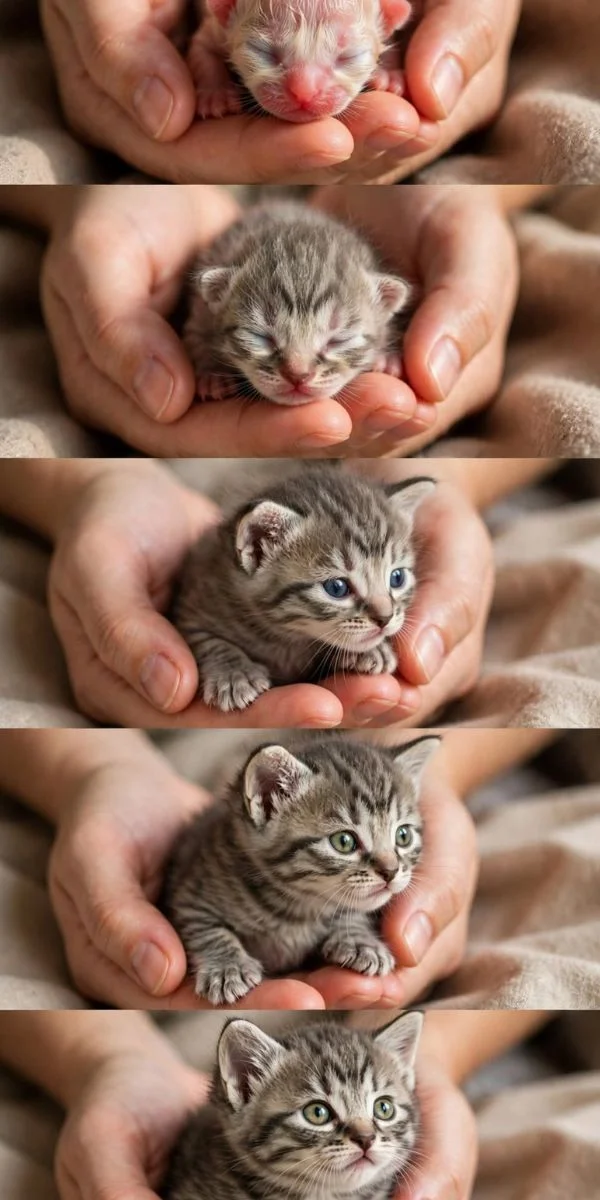
Age helps determine how often a kitten needs feeding and what type of care it requires.
Newborn Kittens
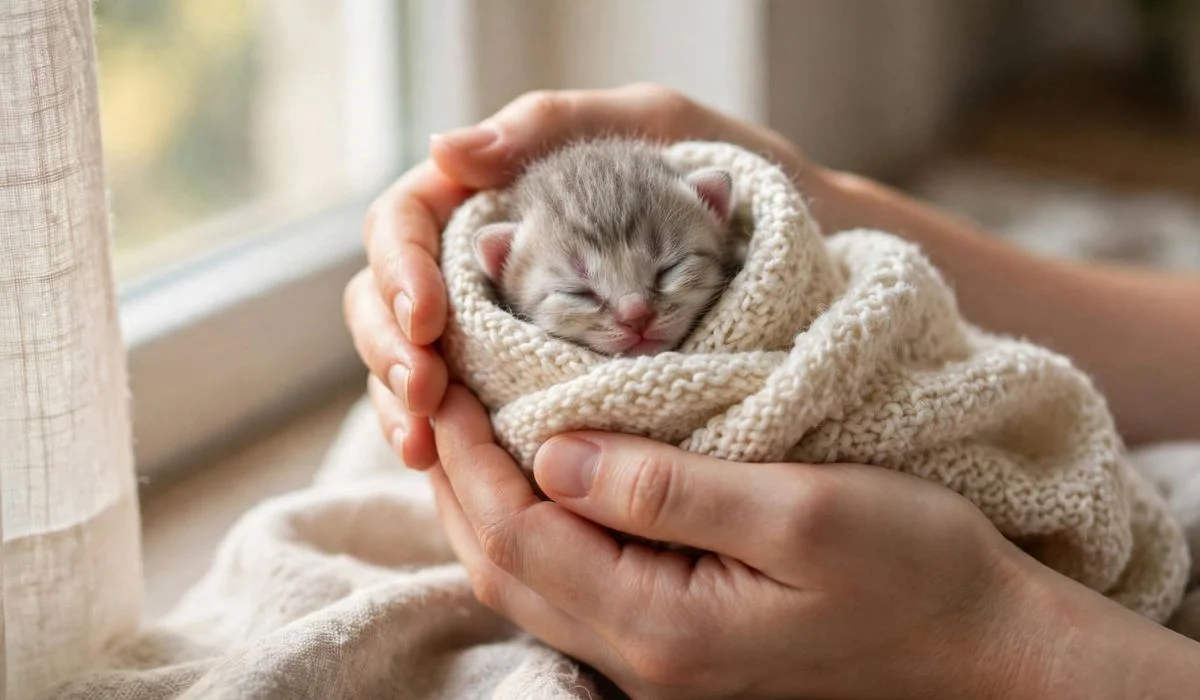
A kitten with closed eyes, folded ears, and very limited movement may be only a few days old. Newborn kittens are highly dependent on their mother or a trained caregiver.
They cannot regulate their body temperature effectively and need frequent feeding and careful monitoring.
Older Kittens
Eyes usually begin opening during the first couple of weeks, and kittens become progressively more mobile afterward. By around four weeks, many kittens can begin learning to eat appropriate kitten food and use a litter box, although individual development varies.
If you are unsure of the kitten’s age, ask a veterinarian to assess it.
Make Warmth the First Priority
Young kittens can become dangerously cold because they have limited ability to regulate their body temperature.
Create a Warm Nest
Use a clean box or carrier lined with soft bedding. A kitten-safe heating source can be placed beneath or beside part of the nesting area so the kitten can move away from the heat if necessary.
Never place a kitten directly against a hot heating pad or other intense heat source.
Check the Temperature Carefully
The nesting area should be comfortably warm rather than hot. Overheating can also be dangerous.
If a very young kitten feels cold, contact a veterinarian promptly for guidance. Do not attempt to feed a severely chilled kitten before getting professional advice, because hypothermia can interfere with normal digestion and swallowing.
Feed an Appropriate Kitten Formula
One of the most important parts of learning how to take care of a kitten without a mother is understanding that orphaned kittens need an appropriate milk replacer.
Use Commercial Kitten Milk Replacer
Commercial kitten milk replacer formulated specifically for kittens is generally preferred for orphaned kittens when their mother’s milk is unavailable.
Do not substitute ordinary cow’s milk as the kitten’s primary nutrition. It does not provide the correct nutritional balance for growing kittens and may cause digestive upset.
Follow Feeding Instructions
The formula package and your veterinarian can provide guidance on preparation and feeding amounts. Requirements depend on the kitten’s age, weight, and health.
Very young kittens generally require frequent feedings, including during nighttime hours.
Feed the Kitten Safely
How you feed an orphaned kitten matters almost as much as what you feed it.
Keep the Kitten in a Natural Position
Feed the kitten with its body positioned naturally, generally with its belly facing downward. Never force formula into its mouth or feed it while lying on its back like a human infant.
Rapid or improper feeding can increase the risk of aspiration.
Use a Kitten Nursing Bottle or Appropriate Feeding Device
Use equipment designed for kittens and follow proper cleaning instructions. The nipple opening should allow formula to flow appropriately without flooding the kitten’s mouth.
If the kitten cannot suckle properly, consult a veterinarian rather than attempting force-feeding techniques on your own.
Help Very Young Kittens Eliminate:
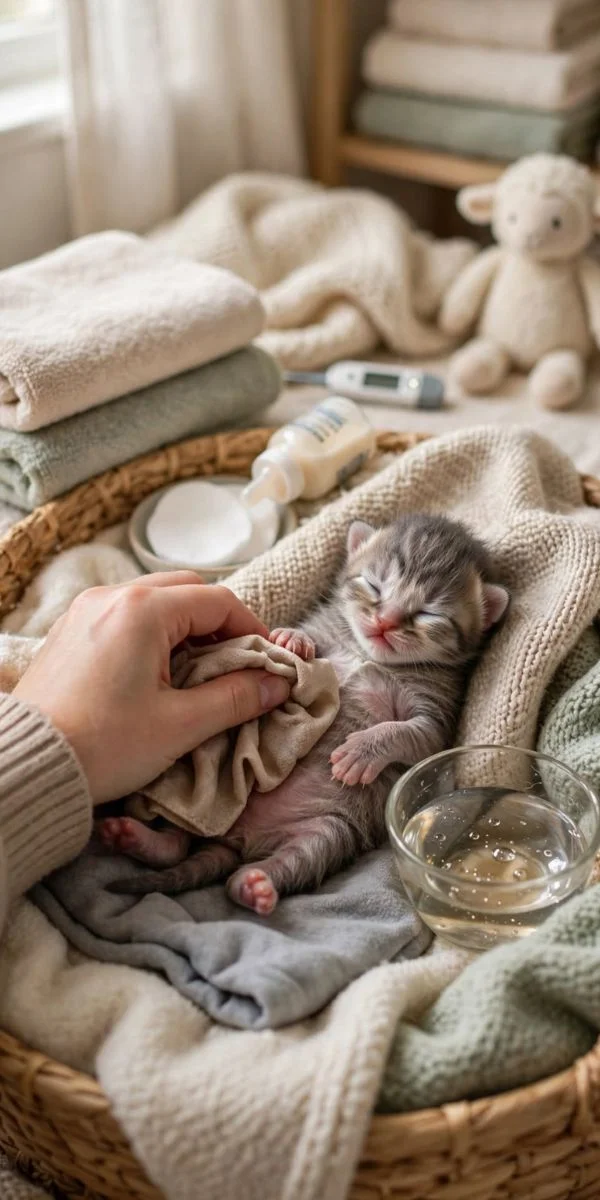
Newborn kittens cannot always urinate and defecate independently. Their mother normally stimulates elimination by grooming them.
Provide Gentle Stimulation
For very young orphaned kittens, a caregiver may need to gently stimulate the genital and anal area with a warm, damp cotton pad or soft cloth after feeding.
Use extremely gentle movements and avoid vigorous rubbing.
Keep the Kitten Clean
After elimination, gently clean and dry the area. Remaining moisture can contribute to skin irritation.
If the kitten does not urinate or defecate normally, contact a veterinarian for advice.
Introduce a Litter Box at the Appropriate Age:
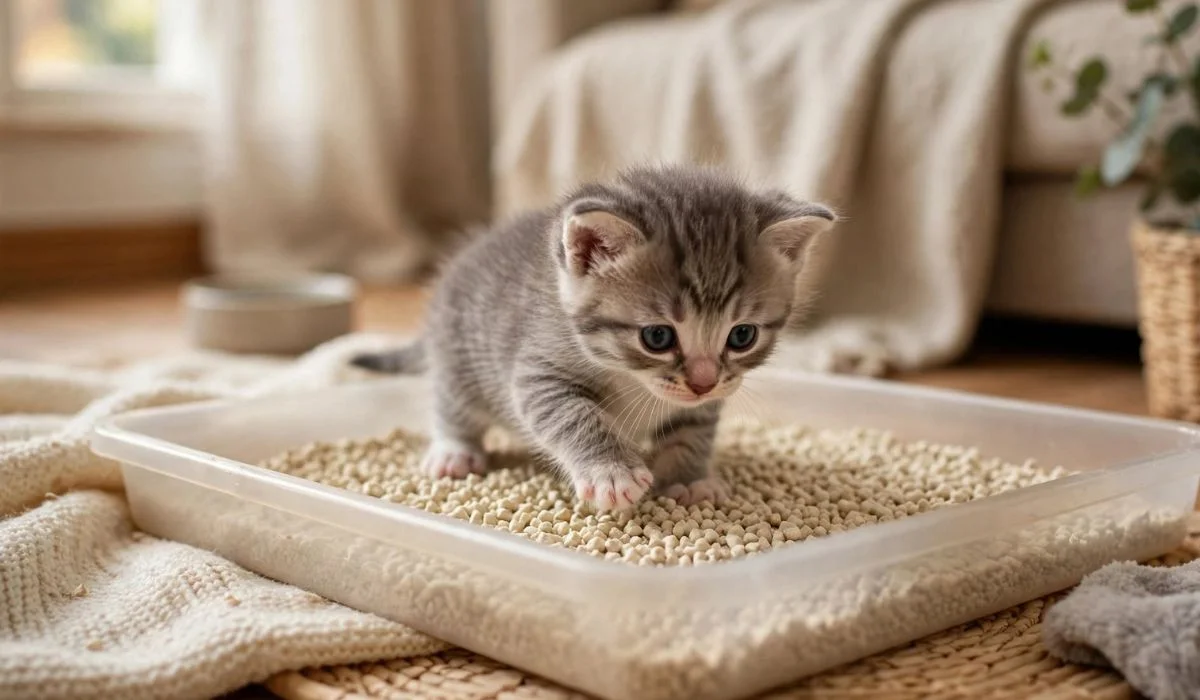
As kittens mature, they gradually become capable of eliminating without stimulation.
Choose a Low-Sided Box
A shallow litter box allows a young kitten to enter and exit easily. Place it in a quiet, accessible area.
Use a litter appropriate for kittens and supervise young kittens so they do not ingest litter.
Encourage Without Punishment
Place the kitten in the litter box after meals or when it appears to be looking for a bathroom area. Never punish accidents.
Positive, calm guidance is more appropriate than scolding.
Read Next: First Time Kitten Owner Checklist | Essential
Keep the Kitten Clean
Mother cats normally groom their kittens frequently. Orphaned kittens may need additional hygiene assistance.
Clean Small Messes Promptly
Use a soft, damp cloth to gently clean formula, urine, or feces from the kitten’s fur. Avoid soaking a very young kitten because getting chilled can be dangerous.
Dry the kitten thoroughly afterward.
Avoid Frequent Full Baths
Unless a veterinarian recommends bathing for a specific reason, spot cleaning is usually preferable for very young kittens.
If a bath is medically necessary, keep it brief and ensure the kitten is completely dry and warm afterward.
Monitor Weight Every Day
Daily weight monitoring can be one of the most useful tools when caring for an orphaned kitten.
Use a Digital Kitchen Scale
A small digital scale capable of measuring in grams can help track growth accurately. Weigh the kitten at approximately the same time each day and keep a written record.
Healthy kittens should generally show consistent growth, but expected weight gain varies by age and individual circumstances.
Take Poor Weight Gain Seriously
Failure to gain weight, weight loss, weakness, persistent diarrhea, vomiting, or refusal to feed can indicate a serious problem.
Young kittens can deteriorate quickly, so contact a veterinarian promptly if something seems wrong.
Schedule Veterinary Care
An orphaned kitten should receive veterinary attention, particularly if its history is unknown.
Check for Health Problems
A veterinarian can assess hydration, body condition, parasites, infections, injuries, congenital problems, and overall development.
Bring information about what the kitten has eaten, its weight history, stool and urine patterns, and any unusual symptoms.
Discuss Vaccinations and Parasite Control
As the kitten reaches the appropriate developmental stage, the veterinarian can establish a vaccination and parasite-prevention schedule.
Never use flea treatments, dewormers, or other medications without confirming that they are appropriate for the kitten’s age and weight.
Provide Gentle Socialization
A mother and littermates normally provide important early social experiences. Human caregivers can support healthy social development through calm, positive interactions.
Handle the Kitten Gently
Once the kitten is stable and warm, brief gentle handling can help it become accustomed to human contact.
Avoid excessive handling when the kitten is hungry, cold, sleeping, or distressed.
Introduce Normal Household Experiences Gradually
As the kitten grows, gradually expose it to safe household sounds, textures, people, and appropriate experiences.
Positive, controlled exposure is preferable to overwhelming the kitten.
Give the Kitten Age-Appropriate Play
Young kittens gradually become more active and curious.
Use Safe Toys
Soft kitten toys, appropriate balls, and supervised interactive toys can encourage movement and exploration.
Avoid leaving strings, ribbons, thread, rubber bands, or small objects with an unsupervised kitten because they can be swallowed.
Never Use Hands as Toys
Do not encourage biting or attacking fingers and feet during play. Use appropriate toys instead so the kitten learns suitable play behavior.
Begin Weaning at the Right Time
Weaning is a gradual process rather than an overnight change.
Introduce Kitten Food Gradually
As the kitten reaches the appropriate developmental stage, usually around the early weaning period, a veterinarian can guide you in introducing wet kitten food or a suitable kitten-food mixture.
The kitten should continue receiving appropriate milk replacer until it is reliably eating enough age-appropriate solid food.
Expect Some Mess
Young kittens may step in food, play with it, or need time to learn how to eat from a dish. Keep the feeding area clean and make changes gradually.
Provide a Safe Sleeping Area
Orphaned kittens need plenty of sleep for growth and development.
Keep the Nest Quiet
Place the kitten’s sleeping area away from drafts, loud noises, and household traffic. Young kittens should have a secure place where they can rest undisturbed.
Keep Bedding Clean and Dry
Replace soiled bedding promptly. Clean, dry bedding helps protect the kitten’s skin and keeps the nesting area comfortable.
Know the Emergency Warning Signs
Orphaned kittens can become seriously ill quickly, so recognizing warning signs is essential.
Seek Veterinary Help for Serious Symptoms
Urgent veterinary attention may be needed if the kitten has difficulty breathing, becomes extremely weak or unresponsive, repeatedly vomits, develops severe diarrhea, cannot feed, feels unusually cold, has seizures, or suffers an injury.
A kitten that is not nursing properly or suddenly stops eating should also be evaluated promptly.
Avoid Common Orphaned Kitten Care Mistakes:
Good intentions can sometimes create problems when a caregiver does not know a kitten’s specific needs.
Do Not Feed Cow’s Milk as a Substitute
Cow’s milk is not an appropriate replacement for a mother cat’s milk. Use a kitten-specific milk replacer unless a veterinarian provides different instructions.
Do Not Overfeed
More formula is not necessarily better. Overfeeding can contribute to digestive problems and other complications.
Follow the formula manufacturer’s directions and veterinary guidance.
Do Not Give Human Medication
Human medications can be dangerous to cats. Never give painkillers, cold medicine, supplements, or other medications unless specifically directed by a veterinarian.
A Simple Orphaned Kitten Care Checklist:
Keep this basic checklist available:
- Determine the kitten’s approximate age
- Provide a safe, warm nesting area
- Use kitten-specific milk replacer when appropriate
- Follow a veterinarian-approved feeding schedule
- Feed in a safe position
- Help very young kittens eliminate when necessary
- Keep the kitten clean and dry
- Monitor body weight
- Track feeding and bathroom habits
- Arrange veterinary care
- Follow vaccination and parasite-control recommendations
- Provide age-appropriate socialization
- Introduce safe play as the kitten develops
- Begin weaning gradually at the appropriate age
- Keep dangerous household items away
Frequently Asked Questions:
How do you take care of a kitten without its mother?
An orphaned kitten needs age-appropriate nutrition, warmth, hygiene, elimination support when very young, weight monitoring, veterinary care, and gradually increasing opportunities for socialization and play.
What should I feed a kitten without a mother?
Use a commercial milk replacer specifically formulated for kittens when the kitten is too young to eat solid food. The appropriate feeding schedule depends on age and weight, so veterinary guidance is valuable.
Can a newborn kitten survive without its mother?
Yes, some orphaned kittens can survive with careful human care, but newborns are particularly vulnerable and require frequent feeding, warmth, hygiene, and monitoring. Veterinary support is strongly recommended.
Can I give a motherless kitten cow’s milk?
Cow’s milk should not be used as the primary milk replacement for an orphaned kitten. It does not provide the nutritional balance kittens need. Use kitten milk replacer instead.
How often should I feed an orphaned kitten?
Very young kittens typically need frequent feedings, but the exact schedule depends on age, weight, health, and the type of milk replacer. Follow product instructions and veterinary guidance.
How do I keep a newborn kitten warm?
Provide a warm, secure nesting area with a safe heat source covering only part of the space so the kitten can move away from the heat. Avoid direct contact with very hot surfaces.
How do I help a newborn kitten poop?
Very young kittens may need gentle stimulation around the genital and anal area with a warm, damp cotton pad after feeding. If the kitten is not eliminating normally, contact a veterinarian.
When can an orphaned kitten start eating solid food?
Kittens generally begin the weaning process at around four weeks of age, but development varies. Introduce appropriate kitten food gradually while following veterinary guidance.
How often should I weigh an orphaned kitten?
Daily weighing can be useful for very young orphaned kittens because it allows caregivers to monitor growth and identify concerning changes early.