
Chances of Finding a Lost Cat After 3 Days: What Are the Odds?
Losing a cat can be frightening, especially when three days have passed without any sign of your beloved pet. You may wonder whether your cat is still nearby, whether it can find its way home, or whether the chances of finding it are becoming smaller.
The encouraging news is that three days is not too late to find a lost cat. Many missing cats are eventually discovered after spending several days hiding, exploring unfamiliar areas, or seeking shelter. Some may even be hiding surprisingly close to home without responding to their owners.
However, the chances of finding your cat depend on several factors, including its personality, age, health, environment, and whether it is familiar with outdoor surroundings.
This guide explains the likelihood of finding a lost cat after three days, where to search, why cats disappear, and the practical steps that can help bring your pet home safely.
What Are the Chances of Finding a Lost Cat After 3 Days?
There is still a reasonable possibility of finding your cat after three days. Three days without a sighting does not mean your cat has traveled far away or that something terrible has happened.
Lost cats often behave differently from how they act at home. Even friendly indoor cats may become frightened and hide when they encounter unfamiliar sounds, people, animals, or surroundings.
A missing cat might be:
-
Hiding under a vehicle or porch.
-
Staying inside a garage or storage building.
-
Hiding in bushes, gardens, or drainage areas.
-
Trapped inside a shed or another enclosed space.
-
Exploring a nearby property.
-
Searching for food and water.
-
Staying in a quiet location until it feels safe.
The important thing is not to assume that your cat has disappeared permanently. Continue searching systematically rather than waiting for it to return on its own.
Why the First 3 Days Are Important When Searching for a Lost Cat
The first few days after a cat disappears are an important time to organize your search.
A frightened cat may initially remain close to the place where it escaped. It may avoid open spaces and stay hidden during daylight hours.
During this period, familiar surroundings, quiet searching, and help from nearby residents can make a difference.
Your Cat May Be Hiding Nearby
Indoor cats that accidentally escape often become frightened by unfamiliar outdoor environments. Instead of immediately traveling long distances, some hide in nearby sheltered locations.
Check places such as:
-
Under cars and motorcycles.
-
Behind outdoor furniture.
-
Under staircases.
-
Inside garages.
-
Behind garden equipment.
-
Beneath porches and decks.
-
Inside bushes and thick vegetation.
Do not overlook small spaces. A frightened cat can squeeze into surprisingly narrow hiding places.
Your Cat May Be Too Frightened to Respond
You might call your cat repeatedly without receiving an answer.
This does not necessarily mean your cat cannot hear you. Fear can cause cats to remain silent and avoid movement, even when they recognize a familiar voice.
Try searching quietly and listening carefully for small movements or sounds.
Your Cat May Be Active at Night
Cats often feel safer moving around when the environment is quieter.
If your neighborhood is busy during the day, your missing cat may become more active after sunset or before sunrise.
Use a flashlight to check dark hiding places. The light may reflect off your cat’s eyes, making it easier to spot.
7 Factors That Affect the Chances of Finding a Lost Cat After 3 Days:
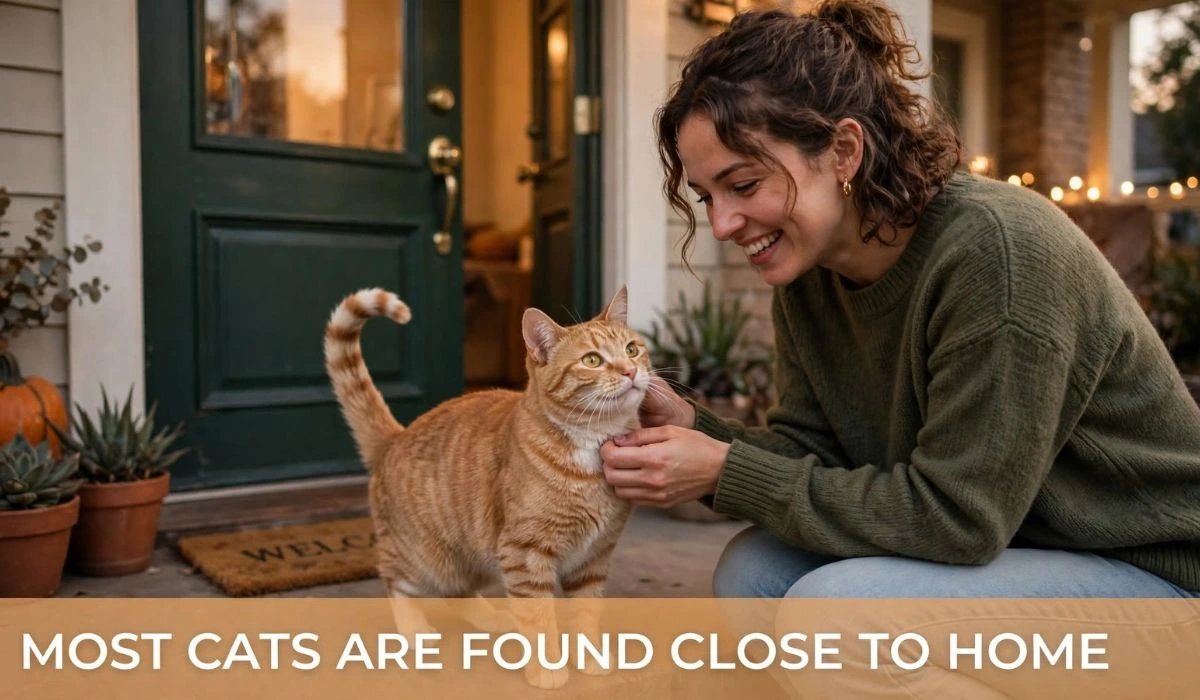
Not every missing cat has the same experience. Several factors influence how easily a cat can be located.
1. Indoor or Outdoor Lifestyle
An indoor-only cat may be unfamiliar with outdoor dangers and could hide close to home.
An outdoor-access cat may know the surrounding neighborhood better and have established familiar routes.
However, outdoor experience does not guarantee that a cat will return quickly.
2. Your Cat’s Personality
A confident and curious cat may explore unfamiliar areas, while a shy or nervous cat may remain hidden.
Friendly cats may approach strangers or enter nearby homes. More fearful cats may avoid people, even when someone tries to help.
Read Next: My Cat Has Been Missing for 2 Years: Hope, Memories & What to Do
3. Age and Health
Kittens, senior cats, and cats with medical conditions may need additional attention during a search.
Young kittens can be particularly vulnerable because they may struggle to navigate unfamiliar surroundings.
Cats requiring medication or special diets should be treated as urgent missing-pet cases.
4. Weather Conditions
Heavy rain, extreme heat, cold temperatures, and storms can affect where a missing cat hides.
During bad weather, cats may seek covered locations such as garages, sheds, stairwells, and sheltered outdoor spaces.
5. The Surrounding Environment
A cat that disappears in a quiet residential neighborhood may face different challenges from one that goes missing near busy roads, construction areas, or commercial buildings.
Consider the immediate environment when deciding where to search.
6. Identification Methods
A collar with an identification tag or a registered microchip can make it easier for someone to contact you if your cat is found.
Without identification, a person may mistakenly assume that your cat is a stray.
7. Search Efforts
The quality and consistency of your search matter.
Checking the same hiding locations, contacting neighbors, posting recent photographs, and notifying animal shelters can increase opportunities for someone to recognize your pet.
Where Should You Look for Your Lost Cat After 3 Days?
If your cat has been missing for three days, expand your search carefully. Start close to home and gradually cover surrounding properties.
Search Around Your Home First
Begin with your property and nearby surroundings.
Check:
-
Gardens and flower beds.
-
Balconies and rooftops.
-
Staircases and corridors.
-
Garages and storage rooms.
-
Drainage spaces.
-
Under outdoor furniture.
-
Empty rooms and neighboring buildings.
Ask household members to help inspect locations carefully.
Ask Your Neighbors to Check Their Properties
Your cat may have entered a neighboring house, garage, or storage area and become trapped.
Politely ask neighbors to inspect their properties rather than simply asking whether they have seen your cat.
A cat trapped inside a closed building may not be visible from outside.
Check Nearby Streets and Parking Areas
Look beneath parked vehicles, around quiet corners, and near sheltered spaces.
Ask drivers and security personnel to check carefully before moving vehicles if a cat may be hiding underneath.
Visit Nearby Feeding Locations
If people regularly feed stray cats, ask whether they have seen an unfamiliar cat recently.
Show them a clear photograph and mention any distinctive markings.
10 Effective Ways to Find Your Lost Cat After 3 Days
Waiting for your cat to return without taking action may waste valuable search opportunities. These practical steps can help you organize a more effective search.
1. Search During Quiet Hours
Try searching early in the morning or late in the evening when neighborhood activity is lower.
Call your cat’s name gently and pause frequently to listen.
Avoid shouting continuously because a frightened cat may remain hidden.
2. Use Your Cat’s Favorite Food
Bring familiar-smelling food or treats when searching.
You can gently shake a treat container or open a food packet if your cat recognizes those sounds.
Do not leave large amounts of food unattended, as this may attract other animals.
3. Place Familiar Bedding Near Your Home
A familiar blanket or bedding item may provide recognizable scents.
Place it in a safe, sheltered location near your home where it will not be exposed to heavy rain or other hazards.
Avoid placing used litter outdoors as a general strategy. It can attract territorial cats and other animals.
4. Put Up Missing Cat Posters
Create simple, readable posters with:
-
A recent photograph.
-
Your cat’s name.
-
Color and distinctive markings.
-
Last known location.
-
Date it disappeared.
-
Contact number.
-
A short missing-cat message.
Place posters in permitted public areas and ask nearby businesses to display them.
5. Post on Social Media
Share your missing-cat notice in neighborhood Facebook groups, community pages, and local lost-pet communities.
Use location-specific descriptions so people can easily understand where your cat disappeared.
Ask friends and neighbors to share the post.
6. Contact Local Animal Shelters
Call nearby shelters and animal rescue organizations.
Provide photographs and ask whether a matching cat has been reported or brought in.
Continue checking because a cat may be reported several days after being found.
7. Notify Veterinary Clinics
A person who finds a lost cat may take it to a veterinary clinic.
Contact nearby veterinary practices and provide your cat’s description. If your pet is microchipped, verify that your registration details are up to date.
8. Consider a Humane Motion-Activated Camera
A camera near a safe feeding location can help establish whether your cat is visiting at night.
It may also reveal other animals using the same location.
If you identify your cat’s movements, you can plan the next steps more effectively.
9. Use a Humane Cat Trap if Necessary
If you have evidence that your cat is nearby but too frightened to approach, a humane live trap may help.
However, use one only with appropriate guidance from an experienced rescue organization or animal welfare professional.
Monitor the trap frequently and never leave an animal unattended in dangerous weather.
10. Keep Searching Consistently
Do not stop after one unsuccessful search.
Check previously inspected locations again, update your missing-pet posts, and follow up with neighbors and shelters.
A cat that was hiding silently on the first day may move to another location later.
Do Lost Indoor Cats Usually Stay Close to Home?
Many lost indoor cats initially hide close to the location where they escaped.
Indoor cats may find unfamiliar outdoor environments overwhelming. They often seek shelter instead of immediately exploring a large area.
However, there is no universal distance that applies to every missing cat.
Some remain near their homes, while others move farther away because of fear, transportation, food availability, or environmental changes.
For this reason, start with a thorough search of nearby properties before expanding to surrounding neighborhoods.
Can a Lost Cat Survive for 3 Days Without Food?
A healthy adult cat may survive several days without food under some circumstances, but that does not mean it is safe.
Water is especially important. Dehydration can become dangerous, particularly during hot weather.
Kittens, senior cats, and cats with existing medical problems may be at greater risk.
If you find your cat after three days, provide access to fresh water and a small amount of appropriate food. If it appears weak, injured, dehydrated, or unwell, seek veterinary care promptly.
Do not force-feed a frightened or severely unwell cat.
What Should You Do When Your Cat Comes Back After 3 Days?
Finding your missing cat can be a huge relief. Even if your pet appears normal, it is important to check its condition.
Check for Injuries
Look for visible wounds, limping, swelling, unusual breathing, or signs of discomfort.
Arrange a veterinary examination, especially if your cat has been outdoors for several days.
Offer Water and Small Meals
Provide fresh drinking water and a small meal.
If your cat is very hungry, avoid giving an unusually large meal immediately.
Let Your Cat Rest
Create a comfortable indoor space with familiar bedding, a litter box, and clean water.
Allow your cat to settle down without unnecessary handling.
Update Its Identification
Check whether your cat’s collar, identification tag, and microchip registration are still accurate.
Consider additional safety measures to reduce the risk of another disappearance.
Common Mistakes to Avoid When Looking for a Missing Cat
Even well-intentioned owners can make mistakes during a stressful search.
-
Searching only during daylight: A frightened cat may be more active at night.
-
Assuming your cat has traveled far: It may be hiding very close to home.
-
Calling too loudly: Repeated shouting can make a nervous cat more reluctant to move.
-
Ignoring enclosed spaces: Cats can become trapped inside garages, sheds, and storage buildings.
-
Giving up after three days: Some cats are found after a much longer search.
-
Sharing unclear photographs: Good-quality images help people identify your pet.
-
Trusting unverified sightings: Ask for photographs or specific details before traveling long distances.
Frequently Asked Questions About Finding a Lost Cat After 3 Days
Is there still hope of finding my cat after 3 days?
Absolutely. Three days is not too long to find a missing cat. Your pet may be hiding nearby, staying in a sheltered location, or moving around when the neighborhood is quiet. Continue searching and contacting local residents.
Do cats usually come back home after 3 days?
Some cats return home within a few days, while others need more time. Their behavior, familiarity with the area, and circumstances of disappearance can influence whether they return independently.
How far can a cat travel in 3 days?
There is no fixed distance. Some cats remain close to home, while others may travel farther. Indoor cats that become frightened often hide rather than travel long distances immediately.
Should I leave food outside for my missing cat?
You can place a small amount of familiar food in a safe, monitored location. A motion-activated camera can help identify which animal is visiting. Remember that unattended food may attract other animals.
Why hasn’t my cat come home after 3 days?
Your cat may be frightened, trapped, hiding, exploring another location, or receiving food from someone else. It may also be unable to find its way home. These possibilities are why an active search is important.
Will my indoor cat survive outside for 3 days?
Some indoor cats can survive outside for several days, but unfamiliar environments can expose them to significant dangers. Access to water, shelter, food, and protection from traffic and other animals affects their safety.
Should I search for my lost cat at night?
Yes. Quiet nighttime or early-morning searches can be useful because cats may feel safer moving when fewer people and vehicles are around. Use a flashlight and search carefully.
Can my cat hear me calling from far away?
Cats have sensitive hearing and may recognize familiar voices. However, a frightened cat might not respond, even when it hears its owner. Continue checking hiding places instead of relying only on calling.
Should I contact an animal shelter after only 3 days?
Yes. Contact shelters and rescue organizations as soon as possible. Provide photographs, identifying details, and your contact information.
What if someone has found my cat but hasn’t contacted me?
A person may assume your cat is abandoned or may not know how to find its owner. Share missing-cat announcements in local groups, contact veterinary clinics, and distribute posters around your neighborhood.
Final Thoughts
The chances of finding a lost cat after three days are still worth taking seriously. Your cat may be hiding nearby, staying inside an enclosed space, or waiting until the surroundings become quiet before moving.
Instead of assuming the worst, focus on a consistent search strategy. Check nearby hiding places, speak with neighbors, contact animal shelters, and share clear photographs through local communities.
Three days without your cat does not mean you have lost your chance of bringing it home. Keep searching patiently, pay attention to possible sightings, and make it easy for anyone who finds your pet to contact you.